The Israeli warning
“A new Turkish threat is emerging. I warn – Turkey is the new Iran. Erdoğan is a sophisticated and dangerous adversary who wants to encircle Israel“. With these words, former Israeli Prime Minister Naftali Bennett opened a meeting of the Conference of Presidents of Major American Jewish Organizations in Jerusalem, pointing to a new front in the already chaotic Middle Eastern chessboard. Ankara’s response was swift: Turkish Defence Minister Yaşar Güler stated that Israel might attack Turkey and that Ankara must be prepared for any scenario. Additionally, last year, Yoni Ben Menachem, senior Middle East analyst at the Jerusalem Center for Security and Foreign Affairs, speaking on the programme The Arabist on Israeli channel i24, declared that “after defeating Iran, we will have to move on to Turkey”. The rivalry between the two countries has, for some time now, appeared less and less rhetorical and increasingly structural. The weakening of Iran in the Middle East could, in this sense, further exacerbate tensions.
A history of ruptures
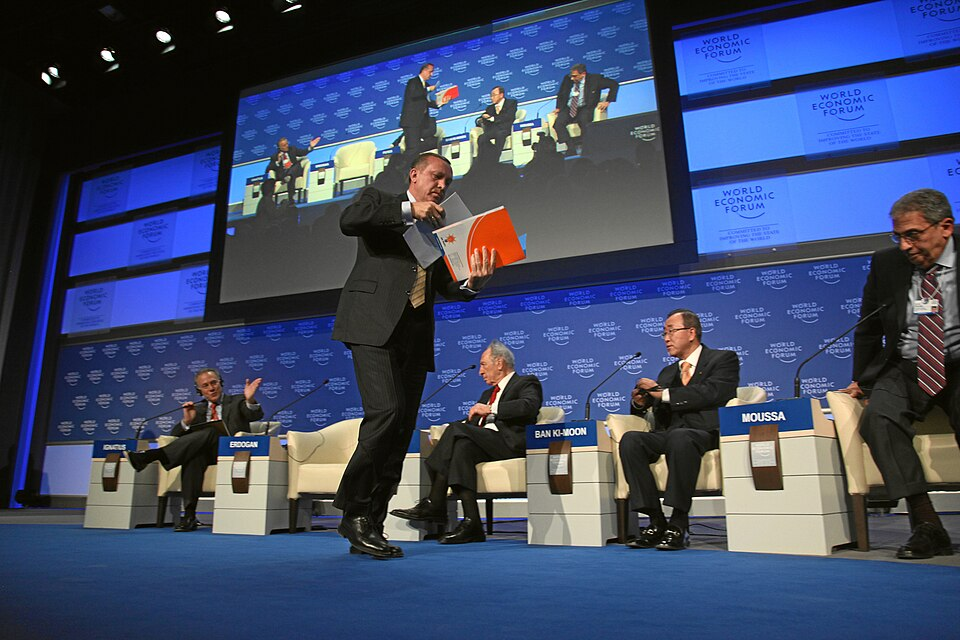
Relations between Israel and Turkey have consistently worsened under Erdoğan’s leadership. The point of no return was the Mavi Marmara incident on 31 May 2010: Israeli commandos from Shayetet 13 boarded the humanitarian vessel bound for Gaza in international waters, killing ten Turkish citizens (Turkish activist Uğur Süleyman Söylemez died on 20 May 2014 after a 48-month coma). Turkey withdrew its ambassador and suspended military cooperation. The episode had been preceded by Erdoğan’s dramatic walkout from the Davos World Economic Forum in January 2009, where the Turkish president left the stage pointing his finger at Shimon Peres: “You know very well how to kill”. Despite several attempts to re-establish normal relations between the two countries, the Israeli military operation in Gaza appears to have produced a new and more pronounced rupture. In 2024, Ankara filed a declaration of intervention at the International Court of Justice (ICJ) in the South Africa v. Israel genocide case. Erdoğan also publicly refuses to engage in dialogue with Netanyahu, whom he has labelled “a war criminal“.

Turkey’s projection across the MENA region
Erdoğan’s pro-Palestinian rhetoric is real, but not exhaustive. Behind it lies a broader strategic project: repositioning Turkey as the hegemonic power of the Sunni Islamic world, heir to the Ottoman legacy, and an obligatory interlocutor for anyone seeking to govern the Middle East.
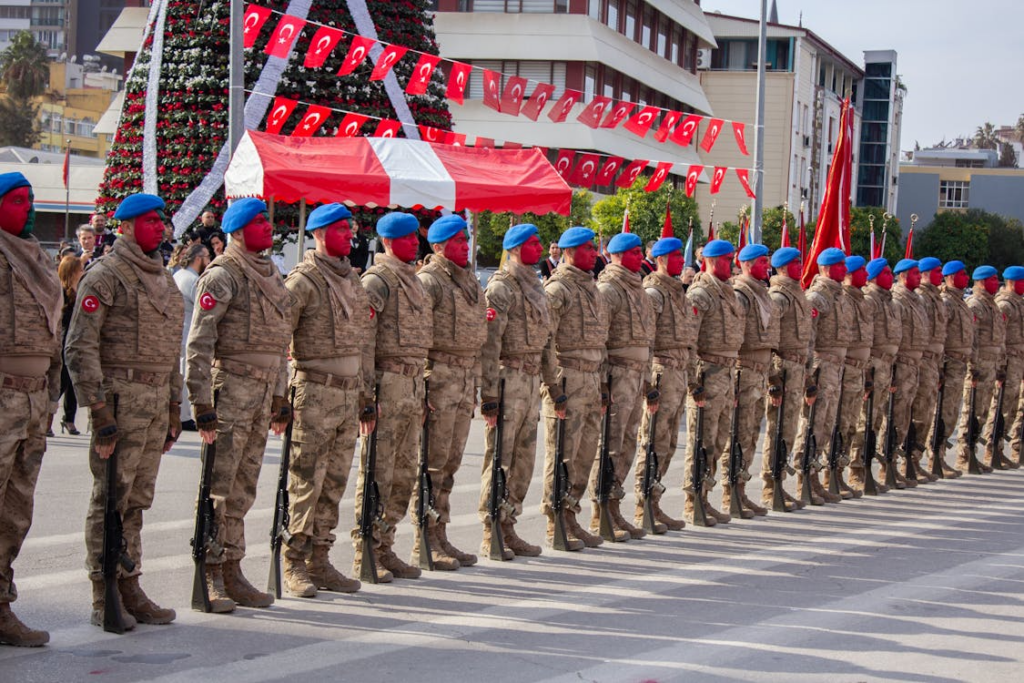
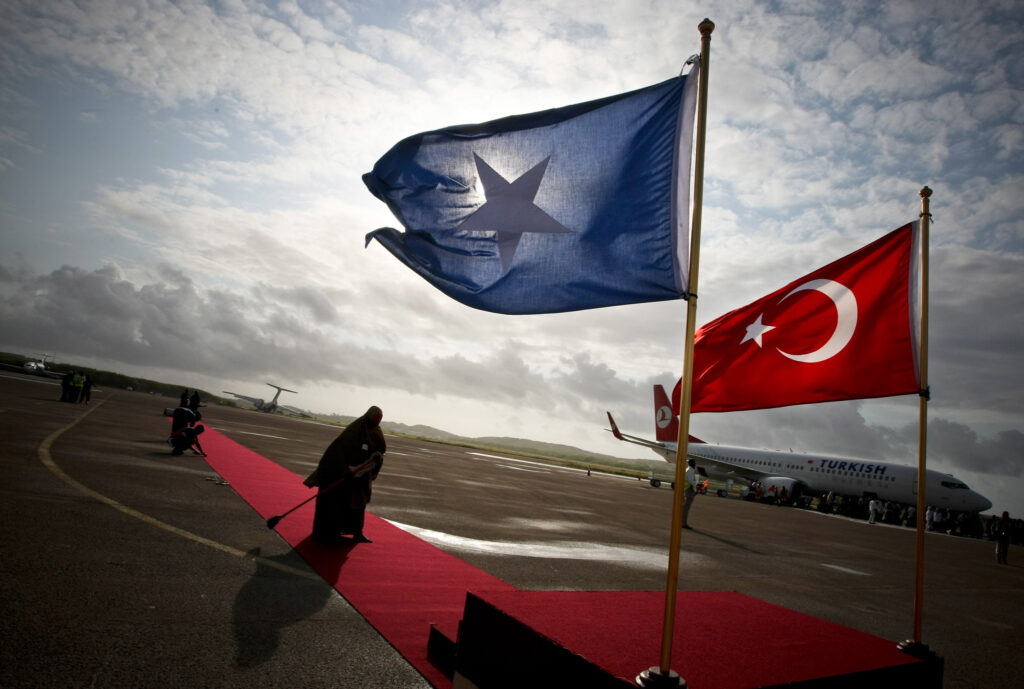
On the military front, Ankara maintains approximately 60,000 soldiers outside its borders – the second-largest international deployment after the United States. Active bases include: Qatar (5,000 troops), Somalia (Camp TURKSOM base in Mogadishu, to which F-16s were added in January 2026 in response to the Israeli recognition of Somaliland), Northern Cyprus (35,000–40,000 troops), northern Syria (10,500 soldiers across 12 bases and 114 outposts), Iraq (5,000–10,000 soldiers), and Libya (four air bases). In Syria, following the fall of Assad, Turkey has entered negotiations for two permanent bases at Palmyra and at the T4 base, with the explicit objective of providing “drones, radar and electronic warfare systems”.
On the industrial front, the Bayraktar TB2 drones – a symbol of Turkey’s defence industry renaissance – have demonstrated their effectiveness in Syria, Libya, Nagorno-Karabakh, and Ukraine. Turkey is developing a new generation of the KAAN fighter jet, maintains a naval fleet comparable in tonnage to Italy’s, and invests approximately 2% of GDP in defence, with an annual budget of around 25 billion dollars, which is steadily increasing.
On the energy front, Ankara asserts jurisdiction over vast areas of the Eastern Mediterranean through the Mavi Vatan (“Blue Homeland”) doctrine, in direct opposition to the Israeli Leviathan and Tamar gas fields and to gas export routes towards Europe. The maritime delimitation agreement signed in 2019 with the Tripoli-based Libyan government cuts horizontally across the Mediterranean, overlapping with the energy routes proposed by Cyprus, Greece, and Israel.
The double game in the war against Iran
In the US-Israel conflict against Iran, Turkey has embodied strategic ambiguity. Erdoğan described the attacks as “a clear violation of international law” and declared that the objective is to keep Turkey out of the “fire”. When Iran, however, launched two ballistic missiles into Turkish airspace – shot down by NATO systems with fragments falling on Gaziantep – the response was surprisingly muted: a formal admonishment (“This must not happen again”), followed by a phone call to Iranian President Pezeshkian during which he stressed the need to reopen diplomatic channels and said attacks on brotherly countries in the region served no one’s interests.
The asymmetry is revealing: Tehran’s violation of NATO airspace was downgraded to an incident between “neighbours and brothers”; a comparable event involving Israel would produce an incomparably more aggressive response. Turkey’s moderation towards Iran is strategic: Ankara does not want to inherit a Middle East in which it has been left alone against Israel with no regional counterweights.
Areas of conflict with Israel
Frictions between the two countries are articulated across four dimensions.
On the military front, Syria is the most explosive theatre. Israel bombed the T4 base in April 2025, preventing Turkish entrenchment. The Israeli Defence Committee does not rule out a direct confrontation, while Minister Katz described the bombings in Syria as “a warning for the future”.
On the political front, Netanyahu has already made clear his opposition to any Turkish role in the future governance of Gaza: “I have very strong opinions on this. Want to guess what they are?“. In the Horn of Africa, Israeli recognition of Somaliland prompted Turkey to deploy F-16s to Mogadishu, signalling that this region too is now an area of direct competition.
On the energy front, Eastern Mediterranean gas remains the most concrete sticking point. Every Israeli pipeline to Europe that bypasses Turkey represents a further area of potential contrast. It is worth noting that, despite the rhetoric, Ankara continued until the outbreak of the war to serve as a corridor for Azerbaijani oil destined for Israel, on which Tel Aviv depends for approximately half of its energy needs: the war with Iran and the Hormuz blockade now make this node even more explosive.
On the diplomatic and legal front, Turkey’s declaration of intervention at the ICJ, its support for Hamas, and Ankara’s role as the voice of the Sunni Islamic world are on a direct collision course with any Israeli vision for the region.
Source: Flickr – United Nations Photo
Russia, China, and the drift away from the West
The crucial question is whether Turkey is sliding out of the Western orbit. The signals are numerous. With Russia, Ankara keeps TurkStream operational, has never applied sanctions over Ukraine, and cannot transfer the S-400s without Moscow’s permission. With China, it has deepened infrastructural ties and tolerated Huawei’s presence in national telecommunications. The EU candidacy has been frozen since 2016, and every deterioration in relations with Brussels pushes Ankara further East.
Erdoğan’s “active non-alignment” – a NATO member that trades with Moscow, an EU candidate drawing closer to BRICS+, an American ally that refuses to isolate Iran – is a high-risk gamble. Ankara is not Iran: it is a NATO member, it hosts American bases, and has the Alliance’s second-largest army. A possible clash with Israel would create a clear strategic paradox: on the one hand, Ankara remains a NATO member and an indispensable partner for the West across several theatres; on the other, a conflict with Israel would put pressure on Israel’s relations with its Western allies (probably not US, but European ones), which would be forced to balance their position. This is precisely the contradiction Erdoğan exploits: Turkish NATO membership is simultaneously his protection and his leverage.
What lies ahead after the war
The war with Iran is reshaping the regional architecture in a potentially irreversible way. The vacuum left by a weakened Iran will be partially filled by Ankara, which is already well positioned in Syria, Somalia, and the Eastern Mediterranean. What Erdoğan wants is recognition of Turkey as a leading power in the new post-Iranian order: an interlocutor that no one can ignore – neither Washington, nor Brussels, nor Tel Aviv.
Turkey and Israel are unlikely to face a military confrontation in the short term; however, the trajectory of their relations is one of structural confrontation, set to intensify on every front – militarily in Syria, diplomatically over Gaza, on energy in the Mediterranean, geopolitically in the Horn of Africa.
For Europe, which must manage a militarily indispensable but politically ever more distant ally, and for the United States, which needs both Turkey and Israel, this triangle is set to become one of the most complex geopolitical knots of the coming years. The answer to how it should be managed is, for now, nowhere to be found. And that, in itself, is already an answer.
Francesco Anghelone