The Trans-Saharan Gas Pipeline (TSGP) would carry Nigerian gas to Europe via Niger and Algeria. Proposed and relaunched several times over the past two decades, the project finally broke ground in early June. Major challenges remain, however, chief among them security concerns that could hinder its completion.
The development of the Trans-Saharan Gas Pipeline project
The idea of a gas pipeline linking Nigeria to Europe via Algeria dates back to the 1970s. The project has since followed a long and uncertain path. It was not until the early 2000s that a key milestone was reached: Nigeria and Algeria signed a Memorandum of Understanding (MoU) that laid the initiative’s groundwork. Progress was subsequently slowed, however, by diplomatic and political challenges, including geopolitical tensions that followed Niger’s 2003 coup d’état, which strained relations between Niamey and its regional partners.
In 2006, a feasibility study assessed the pipeline’s technical and economic viability. Nigeria, Niger, and Algeria then officially launched the initiative in 2009 by signing an agreement to build the infrastructure. At the time, costs were estimated at approximately US$13 billion; since then, however, rising material, labour, and financing outlays have driven the total investment required up to around US$20 billion.
Under the 2009 Agreement, the first gas deliveries were scheduled for 2015; the project failed to meet this timeline, though, due to technical, commercial, and security challenges.
First, Nigeria’s rising domestic gas demand, particularly for power generation, put its gas resources in competition with more commercially attractive Liquefied Natural Gas (LNG) projects and the West African Gas Pipeline (WAGP). Uncertainty over the availability of commercially viable reserves in the Niger Delta also raised concerns among Algeria’s partners and investors, while Nigeria resisted calls for an independent assessment of its reserves.
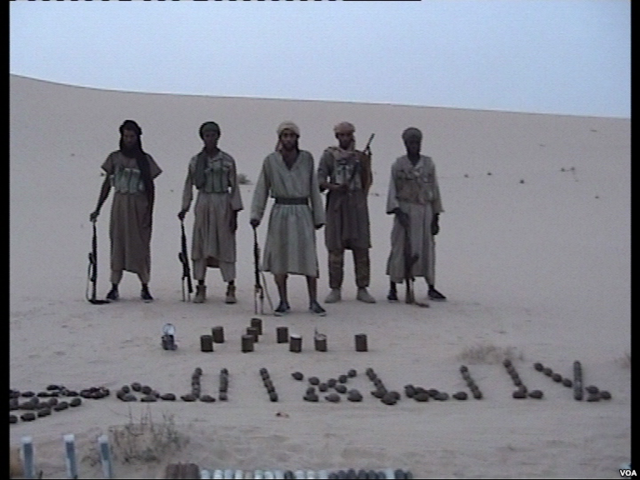
Second, security concerns further delayed the project, as the planned route would cross areas affected by militant and terrorist activity. In Nigeria, for instance, the Movement for the Emancipation of the Niger Delta (MEND) carried out attacks and acts of sabotage against energy infrastructure. In northern Niger, the pipeline faced the risk of Tuareg insurgencies, including those linked to the Niger Movement for Justice (Mouvement des Nigériens pour la Justice, MNJ). In Algeria, meanwhile, Al-Qaeda in the Islamic Maghreb (AQIM) posed a security threat across the Sahara region, carrying out attacks and kidnappings targeting energy infrastructure and foreign personnel.
The project’s launch
After years of stagnation, the TSGP regained momentum in 2022 with a new MoU between Nigeria, Niger, and Algeria. The renewed interest was driven largely by the disruption of European gas markets following Russia’s invasion of Ukraine and the EU’s efforts to phase out Russian fossil fuels. As Algeria emerged as a major alternative supplier to the EU, the TSGP took on added strategic importance as a potential route for bringing additional African gas to European markets.
The project received a fresh political boost in early 2025, when Algerian President Abdelmadjid Tebboune hosted Niger’s leader Abdourahamane Tiani in Algiers, reaffirming the importance of a resolute commitment to bilateral cooperation and strategic energy projects. Construction of the Algerian section officially began on 4 June 2026 in Aoulef, southern Algeria, while work on the Nigerian and Nigerien sections is expected to start in early 2027.
The new section will connect the Nigerien border to Aoulef, linking into the existing pipeline network towards Hassi R’Mel, Algeria’s largest gas hub and main transmission centre in the northern Sahara. Beyond carrying Nigerian gas, the section is also expected to integrate future domestic production, particularly from the Ahnet basin, strengthening both Algeria’s gas transmission and export capacity and its role as a strategic supplier to the EU.
Stretching 4,128 kilometres, the TSGP will carry Nigerian natural gas across Niger to Algeria, where it will feed into the country’s existing transmission grid and connect to European markets via the Mediterranean pipeline system – through TransMed to Italy and Medgaz to Spain. Additional volumes of Nigerian gas could also be exported as LNG through Algeria’s terminals at Arzew and Skikda.
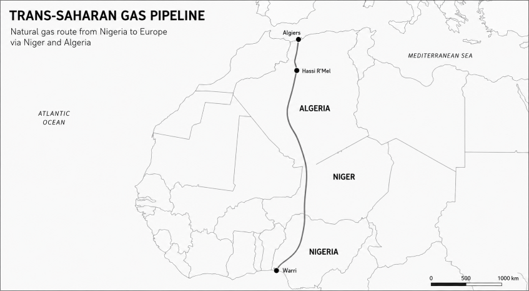
Often described as Africa’s “project of the century” for the energy sector, the pipeline follows a nearly north-south route across the continent, running for approximately 1,037 kilometres through Nigeria, 841 kilometres through Niger, and 2,310 kilometres through Algeria. It will originate in Warri, in Nigeria’s Niger Delta region, and terminate at Hassi R’Mel.
The prospects and challenges of the Trans-Saharan Gas Pipeline
Around 60% of the TSGP’s infrastructure is already in place or under preliminary development, while some 1,700 kilometres still need to be built across the three countries. Completion is currently expected by the late 2020s, although the early 2030s may be a more realistic timeframe, depending on technical studies, financing, and sustained political and security cooperation between Nigeria, Niger, and Algeria.
The project also faces significant technical and environmental hurdles. Extreme temperature variations in the Sahara region could accelerate material fatigue and increase the risk of leaks, while construction work may damage fragile ecosystems, cause habitat loss, and displace wildlife.
The most pressing issue, however, remains security: the route passes through areas where armed groups and cross-border smuggling networks remain active. In Niger, recent attacks on the Benin-Niger oil pipeline have underlined the vulnerability of energy infrastructure in the region. In Nigeria, widespread oil theft (accounting for an estimated 5–20% of the country’s daily output), pipeline vandalism, organised crime, and militant activity – particularly in the Niger Delta – pose persistent risks, while Boko Haram represents a further threat in the north. In Algeria, instability across the wider Sahel and the potential presence of jihadist groups such as AQIM could likewise threaten the pipeline, especially in its more remote stretches. Protecting the route would therefore require extensive surveillance systems, regular patrols, drones, rapid-response units, and satellite monitoring, alongside sustained cooperation between the three governments, making the cost of securing and maintaining more than 4,000 kilometres of infrastructure a challenge in its own right.
The TSGP also faces competition from the Africa-Atlantic Gas Pipeline (AAGP), a 6,000-kilometre project crossing 13 countries along the Atlantic coast that could offer an alternative route, sidestepping some of the security risks associated with the Sahel.
Once completed, the pipeline is expected to carry up to 30 billion cubic metres (bcm) of natural gas to the EU each year, helping to reduce the bloc’s dependence on Russian supplies. At the same time, construction and the ongoing protection of the route could bring significant economic benefits to the countries it crosses, creating jobs, stimulating investment, and improving infrastructure – not least for Niger, one of Africa’s poorest countries. For Nigeria, which holds Africa’s largest proven gas reserves, the TSGP would offer a way to monetise its resources beyond LNG exports, in line with its ambition to become a major global gas exporter. Algeria, which holds the continent’s third-largest reserves, could also strengthen its position as a reliable energy partner to the EU by working with Nigeria to expand export volumes while meeting its own rising domestic demand.
Conclusion
A cost-benefit analysis of the project therefore reveals a mixed picture. On the one hand, its construction could bolster the economic resilience of the countries involved. On the other hand, it remains to be seen whether these benefits will be enough to offset the substantial costs, not least those linked to securing the infrastructure against the risk of attacks by terrorist groups.
The pipeline’s economic return will also depend on several other factors: first, while it would help reduce the EU’s dependence on Russian gas, it would do so by shifting reliance towards countries where security and political stability remain fragile; second, volatility in global gas markets could affect the project’s profitability and long-term viability; and third, while the EU is seeking new sources of supply to shore up its energy security in the short and medium term, its longer-term strategy is aimed at reducing dependence on fossil fuels altogether and expanding renewable energy. Future European demand for Nigerian gas therefore remains uncertain. Finally, shifts in the geopolitical landscape – including the possibility of Russian gas returning to European markets – could further alter the project’s economic and strategic outlook.
If successfully delivered, the TSGP could set a precedent for large-scale energy integration in Africa and strengthen the continent’s role in global energy markets. Its ambitions, however, run up against considerable economic, political, security, and technical challenges, underscoring how difficult it will be to deliver a project of this scale on an ambitious timeline while keeping it aligned with Europe’s long-term sustainability goals.
Laura Ponte