
The jump in oil prices following the brief resumption of clashes between the US and Iran in the Strait of Hormuz in mid-July 2026 is a constant reminder of the importance of waterways and choke points in relation to global trade and energy security. This reality appears to be particularly salient for Europe and the Mediterranean. In addition to Hormuz, Mediterranean energy and economic security relies upon four key choke points – the Strait of Gibraltar, the Turkish Straits, the Suez Canal, and the Strait of Bab el-Mandeb. These critical transit points are experiencing significant changes. In some cases, instability, conflict, and closures are already a reality or represent a very likely scenario.

Gibraltar: Closer to Europe, but a Source of Geopolitical and Humanitarian Challenges
Gibraltar is a self-governing British territory with a population of around 40,000 and a very strong trade relationship with the EU. The territory – particularly the Harbor and the 426 m (1,400 ft) tall Rock of Gibraltar – provides a commanding position over the 14 km (9 mi) wide and 900 m (2,952 ft) deep strait that connects the Atlantic and the Mediterranean. By 2024, estimates indicated that around 1,000 military vessels and more than 100,000 commercial boats passed through this strait each year. In mid-July 2026, Gibraltar became part of the Schengen area. This means that Gibraltar is now more integrated with the European Union and more distant from the United Kingdom on the economic and political level. British travelers will have to go through passport checks. The territory is adopting EU regulations that are leading to a rise in taxation on goods and services such as tourism. At the same time, integration in the EU will facilitate trade in services – such as online gaming, shipping and financial services – that represent a substantial component of Gibraltar’s GDP.
On the other side of the strait, the Spanish exclave of Ceuta – an autonomous city with a population of around 83,000 – represents an important challenge on the political and humanitarian level. The territory borders Morocco and has become a focal point for migrants trying to reach the territory of the EU. Controlling migration flows has created several political disputes between Morocco on one hand and Spain and the EU on the other. In May 2021, the government of Morocco suspended border controls for two days and that caused an influx of 8,000 people. On July 31st, 2026, the exclave was again the epicenter of a major humanitarian crisis. By August 4, it was estimated that about 60,000 people had crossed the border between Ceuta and Morocco by sea and at least 72 people had died in the attempt to swim across the border. The Spanish government attributed responsibility for this massive crisis to human traffickers and took actions that led to the repatriation of virtually all migrants who had crossed the border. The crisis contributed to sowing disunity within the EU. The Italian government temporarily suspended the Schengen agreement – which allows EU citizens to travel across member states without going through border checks – in relation to Spain, and the move was supported by Denmark, Finland, and the Czech Republic. The Spanish government strongly criticized that decision. European Commission President Ursula von der Leyen called for stronger controls and the use of physical barriers to better manage the EU’s external frontiers.

Recent developments concerning the Strait of Gibraltar send a contradictory picture concerning the future of European integration. On the one hand, the new status of Gibraltar has demonstrated the potential represented by the Schengen agreement and the appeal of the process of European integration. On the other hand, the crisis in Ceuta has exposed how difficult it is for the EU to manage migration flows and speak with one voice in times of crisis.
The Turkish Straits: Under Pressure from the Ukraine War
The Sea of Marmara and the Turkish Straits – the Bosporus and the Dardanelles – represent a vital transport connection between the Black Sea and the Mediterranean. The Bosporus, which runs through Istanbul, is 32 km (19.8 mi) long. Its width is 3 km (1.8 mi) at its widest point and 700 m (2,296 ft) at its narrowest. At the other end of the Sea of Marmara, the Dardanelles is a 61 km (37.9 mi) long waterway. It is estimated that 40,000 to 46,000 commercial ships use the Turkish Straits each year. The straits operate on the basis of the 1936 Montreux Convention, which guarantees free passage of civilian vessels in time of peace but strictly regulates the passage of military vessels. On the other hand, it is useful to note that Turkey does apply a toll on ships passing through the straits. The toll is not a transit fee but covers services such as lighthouses and rescue missions.

The Black Sea has become a key theater in the Ukraine War. The Kiev government’s ability to keep open trade routes across the Black Sea represents a major economic lifeline in the effort to resist Russia’s invasion. Passage through the Turkish Straits has been crucial in guaranteeing access to global markets for Ukrainian exports – especially cereals and agricultural products. Ukraine has managed to remain a major exporter of wheat, corn, oilseeds and vegetable oil. The Turkish Straits thus represent a major chokepoint in global food security.
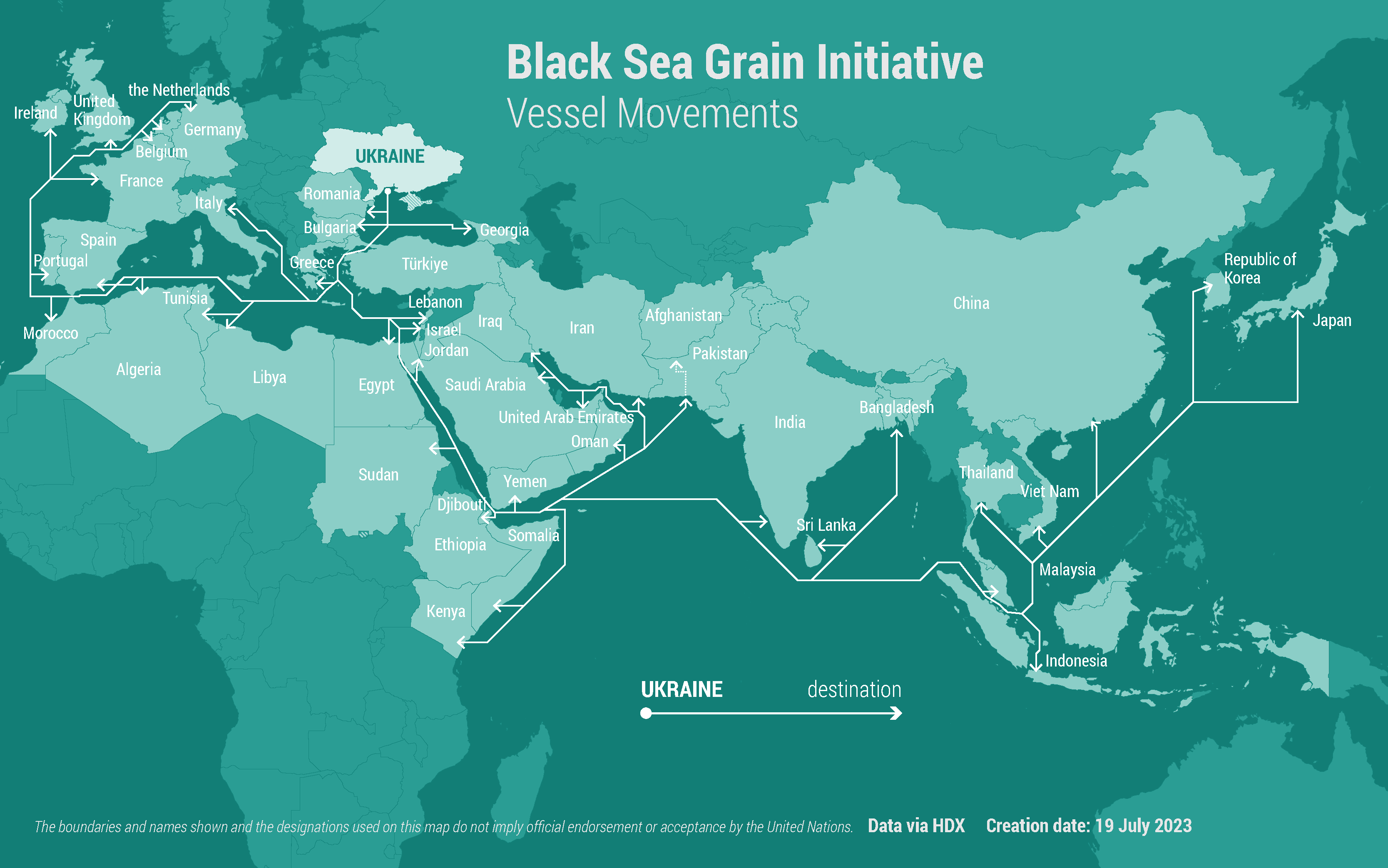
So far, the Turkish government has demonstrated its ability to guarantee passage through the straits. However, the increasing frequency and effectiveness of Ukrainian operations to weaken Russia’s hold over the Crimean Peninsula – a region of Ukraine that Russia illegally occupied and annexed in 2014 – might induce a new escalation in the Black Sea and create more pressure on this critical waterway. Russia has also intensified missile and drone attacks on commercial vessels using Odesa and other Ukrainian ports. Ukraine, in turn, has retaliated with attacks on Russian ports on the Black Sea. On July 26, moreover, Ukraine carried out a long-range strike on an Iranian cargo vessel in the Caspian Sea, which, according to Ukrainian authorities, was transporting weapons to Russia. The Iranian government considered the possibility of a retaliatory strike against Ukrainian ports but eventually decided to avoid such a response. However, the episode demonstrated the very serious risk that the two most prominent conflicts affecting the Eurasian landmass could converge. Such an eventuality would increase pressure on Turkey and have significant implications for the security of the Black Sea and the Mediterranean as well.
Hormuz: The Epicenter
Since the launch of Operation Epic Fury – the joint US-Israeli attacks on Iran on February 28, 2026 (also known in Israel as Operation Roaring Lion) – the Strait of Hormuz has become the epicenter of the Iran War. The strait is around 50 km (31 mi) wide at its entrance and exit. However, its narrowest point – a passage controlled by Iran and Oman – is only about 33 km (20.5 mi) wide. Before the start of the war, 25% of the world’s oil and 20% of the world’s liquefied gas passed through the strait, and passage was free.

The security of the Strait of Hormuz has been a constant concern for US and international leaders for decades. During the Iran-Iraq War (1980-1988) both belligerents attacked tankers transporting oil through the strait – the so-called “Tanker War.” This created havoc in global energy markets and prompted the US to deploy naval assets in the Persian Gulf and reflag some ships in order to deter this type of harassment. The risk of a closure of the strait has been the object of academic studies and was taken into consideration in relation to the June-July 2025 “Twelve-Day War” that started with an Israeli attack against Iran and then expanded with US airstrikes against Iranian nuclear facilities.
The attacks launched by the US and Israel against Iran in late February 2026 prompted a “horizontal escalation” on the part of the Tehran regime that revolved around attacks on the territories of neighboring countries that host US military bases and troops as well as operations to disrupt passage through the Strait of Hormuz. The halting of traffic through the strait has had a severely negative impact on global energy markets. That, along with the massive costs in terms of military equipment for the US and its allies, eventually favored a tentative ceasefire in April and the signature of a Memorandum of Understanding between the US and Iran in June.
The Memorandum of Understanding, however, was characterized by significant ambiguity in relation to the status of the Strait of Hormuz. As observed by Vali Nasr, Iran wanted to preserve control over passage through the strait – a major advantage it had managed to achieve as the result of the war launched in February by the US and Israel. The Trump administration, however, is not prepared to accept such a new status for this critically important global energy choke point. In particular, Iran wants to impose a $2 million toll on ships passing through the strait. Estimates suggest that imposing such a toll could generate revenues between $5bn and $8bn annually to Iran and Oman. Such a toll would be incompatible with international law and the 1982 UN Convention on the Law of the Sea – of which Iran is a signatory. On the other hand, as noted above, Turkey imposes a fee for the security and assistance services it provides to ships passing through the Bosporus and the Dardanelles. Negotiations sponsored by Oman have produced a proposal calling for a “voluntary contribution” on the part of the Gulf states. The Trump administration denounced the Iranian claim as incompatible with international law but president Trump also manifested the intention to impose a 20% fee on shipping across the strait to recover the cost of operations in the Hormuz area. That would be a much bigger fee than the one imposed by Iran.
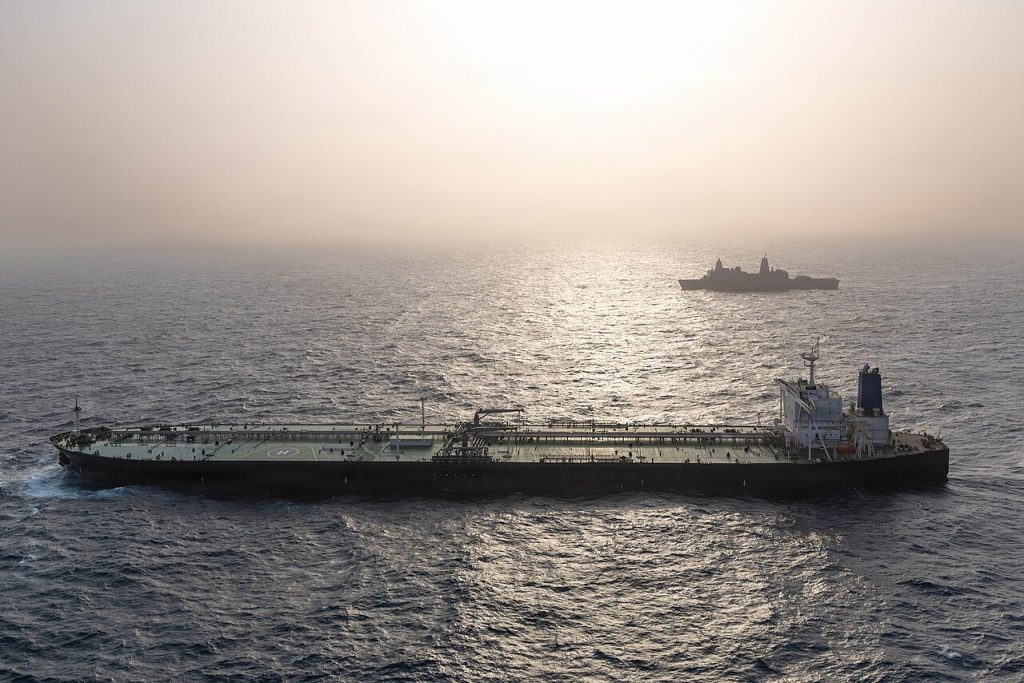
The United States challenged Iran’s claim over Hormuz by guiding ships through the strait with the assistance of the US Navy and establishing a southern route near the Omani coast. Despite US efforts to guarantee air cover to ships that take the southern route, Iran has successfully used its military power to force ships to pass close to Iranian territorial waters in order to charge them. On July 8, 2026, after Iranian strikes against tankers that were trying to pass through the strait, the US restarted military operations against Iranian naval assets in the Gulf. The revival of hostilities also led to a new series of escalatory steps. The US military carried out strikes on targets inside Iran – including civilian infrastructure – and President Donald Trump threatened to systematically hit civilian infrastructure. The problem with this approach – as evidenced during fighting in March and April – revolves around the time and cost required for this strategy to work. It would take several weeks of sustained strikes to sufficiently degrade the Iranian capability to launch drone and missile attacks. The negative impact on global energy prices and the damage caused on US and allied military assets, however, would be immediate. The depletion of air defenses and advanced missiles associated with this approach, moreover, is already creating serious challenges in terms of US global strategy.
Iranian retaliatory strikes have focused on US military infrastructure and other targets in the Gulf States. Since the restart of hostilities, Kuwait has been the target of direct Iranian strikes as well as cross-border attacks carried out by pro-Iranian militias operating in southern Iraq. Targets have included infrastructure such as power and desalination plants. In Jordan, Iranian strikes against US bases killed three American soldiers. This new round of military escalation was interrupted by a pause on June 24, but after a few days clashes resumed with a new Iranian strike in Jordan as well as American and Saudi Strikes against Iranian proxies in Iraq. Over the weekend of August 1st, it appeared that the US and Israel were preparing for a new round of massive attacks against Iran’s infrastructure but then President Trump announced that the attack had been called off and negotiations would resume. As the situation in the Strait of Hormuz remains uncertain and volatile, the Red sea is emerging as a major battlefield in this regional conflagration.
The Red Sea: The Emerging Battlefield
The Red Sea is an area saturated with geopolitical rivalries, instability, conflicts and humanitarian emergencies. This waterway has been a key theater in the regional conflagration started with the October 7, 2023 terrorist attacks carried out by Hamas against Israel. In recent weeks, however, the importance of the Red Sea and the choke points that connect it to the Mediterranean and the Indian Ocean appears to be on the rise.
The Red Sea is a crucial transit route for global trade. Passage through this waterway is dependent on two strategic choke points: the Bab el-Mandeb strait in the south and the Suez Canal in the north. The Bab el-Mandeb is 30 km (18 mi) long and connects the Red Sea to the Indian Ocean. Most of the traffic through Bab-el Mandeb goes through the 26 km (16 mi) wide passage between the coast of Djibouti and Perim Island, controlled by Yemen. Before the Iran War, the Red Sea accounted for 12% of global maritime traffic and 40% of exchanges between Europe and Asia. 4.1m barrels of crude oil and refined petroleum products (5% of the global total) passed through the Bab el-Mandeb. With the closure of Hormuz, the strait has become an alternative route to ship oil out of the Arabian Peninsula.

The Suez Canal is a 193 km (120 mi) long and 313 m (1,026 ft) wide waterway that connects the Red Sea to the Mediterranean. By 2021, it was estimated that roughly 30% of the world’s shipping container volume transited every day through the canal, and about 12% of total global trade of all goods. Data suggest that by 2024 revenues from the canal represented around 20% of the Egyptian government budget. Tourism in the Red Sea also represents an important source of revenue for Egypt.

After the October 7, 2023 terrorist attacks, the Houthis – a pro-Iranian insurgent group that operates in the Western part of Yemen – started harassing and attacking ships in the Red Sea, ostensibly to disrupt trade with Israel. Houthi attacks had a major impact on global trade, and that prompted a military response on the part of the US and its allies. American, British, and Israeli forces launched airstrikes against the Houthis and, in December 2023, Operation Prosperity Guardian was launched in the Red Sea. The operation was led by the US with the support of the UK, France, Canada, and Italy. In addition, in February 2024, the EU launched EUNAVFOR Operation Aspides in the area.
US operations against the Houthis were revived in January 2025 with the launch of Operation Rough Rider, which led to more than 1,000 strikes against Houthi targets. This escalation, however, was economically very expensive and required a substantial diversion of resources and military assets from other theaters. Estimates indicate that between October 2023 and May 2025, it cost the US Navy $2 billion in ammunition to protect its own ships during operations against the Houthis in the Red Sea. At the same time, the Houthis continued to demonstrate an ability to carry out offensive operations, hitting Tel Aviv, in Israel, in May 2025. In the event, on May 6, 2025, a ceasefire with the Houthis was reached by the Trump administration.
The Red Sea is also the arena of several other regional crises, including a tragic civil war in Sudan that has seen the involvement of Egypt, the UAE, Saudi Arabia, Turkey, Qatar, and Russia and might have caused the death of 150,000 people. Somalia, a key territory at the entrance of the Bab el-Mandeb, has also been ravaged by conflict, state collapse, and fragmentation. Turkey’s largest overseas military base is located in Somalia. In February 2025, the Trump administration launched major air strikes against Islamic State militants in the country. In December of the same year, Israel became the first country to recognize the territory of Somaliland as an independent state. A number of conservative-leaning think tanks in the US expressed interest in Somaliland, and the Trump administration has considered recognition of this territory and an independent state. Somaliland was considered a stable and relatively democratic government that could offer the opportunity to develop bases and military presence in the Gulf of Aden and Red Sea. Contrary to many Middle Eastern and African countries that are increasing their relations with China, moreover, Somaliland has developed relations with Taiwan. Before the October 2025 ceasefire in Gaza and the Trump administration’s “Comprehensive Plan” moreover, it was believed that Somaliland could also agree to accept refugees from Gaza.

The war in Iran has dramatically revived tension and instability in the Red Sea. In June 2026, as the ceasefire between the US and Iran appeared increasingly under stress and Israel carried out very intensive military operations in Lebanon, the Houthis threatened to blockade Israeli shipping in the Red Sea. The conflict has also undermined a 4-year truce between the Houthis and the Saudi-led coalition that between 2015 and 2022 intervened in Yemen against the Iran-backed militia – a war that generated a massive humanitarian emergency in the country.
On July 13, 2026, the Houthis accused Saudi Arabia of striking Sana’s airport and threatened to retaliate. According to Saudi authorities, the Houthis fired ballistic missiles in the direction of Saudi Arabia. The Tehran regime has requested the Houthis to prepare to close the Red Sea if US forces attack Iran’s power infrastructure. The Houthis threatened to blockade Saudi ports and then followed up on their threat by hitting Saudi vessels in the Red Sea. The militia has carried out missile and drone attacks and severely disrupted maritime traffic through the Bab el-Mandeb and the Red Sea. An effective blockade would further disrupt oil markets because Saudi Arabia has diverted 70% of its energy exports through its Red Sea port of Yanbu and the Red Sea now carries around 7% of global energy supplies. The Bab el-Mandeb has thus become a major alternative to Hormuz for Saudi oil exports, and now that this waterway is under pressure, it seems difficult to imagine that a similar quantity of Saudi oil could be shipped north through the Suez Canal. On July 30, 2026, a drone attack attributed to pro-Iranian militias hit the port of Damietta in Egypt – around 50 km (31 mi) from Port Said, at the northern edge of the Suez Canal. The attack caused a fire that damaged a US-owned storage and regasification vessel and a Greek-owned LNG tanker.
Tension in the Persian Gulf and the Red Sea has thus brought Saudi Arabia directly into the vortex of regional instability created by the Iran War. The Saudi economy has been severely hit by conflict in the Middle East. Saudi GDP contracted by 4.8% in the second quarter of 2026 compared to the same period in 2025. In order to deal with threats in the Red Sea, the Saudis are trying to assemble an international coalition. According to the Saudi government, such a coalition could feature countries such as Turkey, Egypt, Pakistan, Nigeria as well as other Arab and African states. Some European countries and the US have been invited. Saudi Arabia also seems to be preparing for ground operations in Yemen.
Conclusion: Choke Points, Vicious Circles, and Off-Ramps
An overview of the current state of the most important Mediterranean and Middle Eastern choke points demonstrates how vital this region is to the global economy. Conflicts in the region have immediate repercussions on the price of energy as well as on global trade flows, and the stakes are so high that escalations generate vicious circles that are virtually impossible to control.
For decades since the end of World War II, and particularly since the announcement of the “Carter Doctrine” in 1980, the US has played a crucial role in shaping the balance of power in the Middle East and the Mediterranean. For better and for worse, US military power was critical to keeping the stability of the region and guaranteeing the security of, and safe passage through, the choke points reviewed in these pages. American power, however, has been much more effective when used to preserve the status quo – like in the Persian Gulf crisis of 1990-1991 – rather than when employed in the pursuit of grand schemes to change regimes and radically reshape the geopolitics of the region. Conflicts such as the Iraq War of 2003 and the current Iran War are examples of the multiple and intertwined negative consequences that excessively ambitious military interventions can entail.

As these lines are written, it appears very hard to imagine a return to the situation that was in place on February 27, 2026 – the day before the launch of Operation Epic Fury. Going back to a situation in which the United States acts as the only and unchallenged “policeman” of the Middle East and carries the weight of ensuring the security of the commons located in that region might no longer be feasible – because of both the tremendous human and and economic costs sustained by the US and the fact that opinion polls indicate that Americans are increasingly opposed to military interventions in the region and have strongly unfavorable views concerning the current war in Iran. On the other hand, it seems that, without a strong and decisive US role, the other regional and international powers that have a stake in the security of the Mediterranean, the Red Sea, and the Persian Gulf are unwilling or incapable of acting in concert to defuse tension, stabilize the region, and ensure the security of critical choke points.
It is reasonable to argue that the most promising way out of this conundrum would be an acknowledgement on the part of the United States, its regional and international powers, as well as America’s Middle Eastern and global competitors that some form of governance and coordination in relation to the choke points of the Mediterranean and the Middle East is crucial to keep the global economy running and avoid dangerous conflicts and disastrous escalations. As these lines are written, the most pressing issues driving the conflict with Iran are the status of the Strait of Hormuz and the Iranian nuclear program.
Concerning Hormuz, the most promising solution appears to be a new deal concerning passage through the strait based on some form of Iranian-Omani collaboration and following the model that regulates passage through the Turkish Straits. In relation to the Iranian nuclear program, the most successful solution so far has been the now-defunct Iranian nuclear deal of 2015 – also known as the Joint Comprehensive Plan of Action. The deal was reached by the Obama administration thanks to negotiations involving Iran, Russia, China, the UK, France, and Germany, as well as institutions such as the European Union and the International Atomic Energy Agency. In 2018, however, the first Trump administration decided to withdraw from the deal. Negotiations between the US and Iran during Trump’s second term have been discredited twice – first by the “Twelve-Day War” of the summer of 2025 and then by Operation Epic Fury. It seems clear, however, that neither the US nor Iran have an interest in continuing this conflict. It might not be possible to recreate the JCPOA, but the approach that led to that deal – a long, patient, and pragmatic negotiating effort within a multilateral framework to reach a clear and enforceable compromise – seems to be a rather valid alternative to a war that has so far proved unpopular, inconclusive, and expensive.
When it comes to the current situation in the Middle East, pessimism is the dominant sentiment and it is very difficult to imagine an end to the vicious circle of conflict, escalation, and global economic turmoil that has characterized the Iran War. However, the stakes are so high that it is imperative to adopt as soon as possible a pragmatic attitude and start working on negotiated solutions to restore some form of governance and guarantee the stability of a region that is vital to the global economy.
Diego Pagliarulo