
The Israel-Palestine question directly affects the security and values of the European Union as well as the interests and foreign policy priorities of its member states. The EU is both Israel’s most important trading partner and the largest source of economic support for the Palestinian Authority. Some EU member states – along with the United Kingdom, other European countries, and Canada – have recently taken important initiatives in relation to the situation in Gaza and the West Bank, while European institutions have called for a stronger European stance concerning the increasing evidence of settler violence and human rights violations in the Palestinian territories. However, other members of the Union appear reluctant to follow this path, and advocate for policies aimed at preserving a close relation with Israel despite the increasingly controversial initiatives that characterize the government led by Benjamin Netanyahu and his right-wing coalition.
New Wave
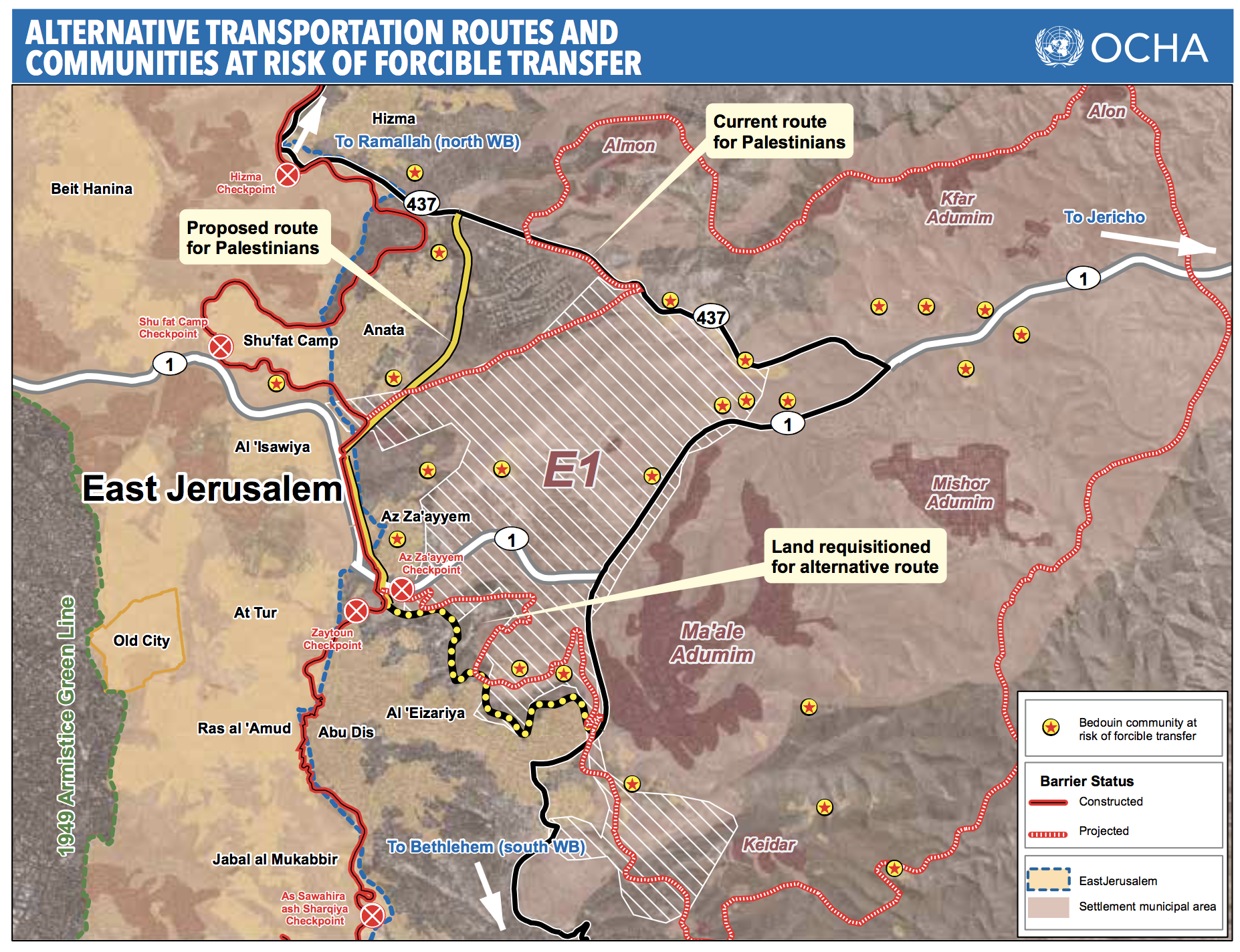
On September 8, 2026, the government of the United Kingdom instituted sanctions against Israeli settlers in the West Bank. As he announced the new measure, Ed Miliband, the UK Foreign Secretary, stressed his identity as a “proud British Jew” and an “unwavering” supporter of Israel, but added that the policy was needed because “there is ethnic cleansing of Palestinians in areas of the West Bank – perpetrated by settler terrorists.” The announcement was followed by similar measures adopted by Canada, France, and nine additional European countries – Denmark, Finland, Iceland, Ireland, Norway, Poland, Portugal, Spain, and Sweden. This major policy initiative was taken one day after the announcement by the Israeli government of a plan to relaunch the development of a highly controversial settlement project known as “E1” in the West Bank – the “E” stands for “east of Jerusalem.”

E1 and other Israeli settlements in the West Bank and East Jerusalem have become an entrenched feature of the Israel-Palestine question and represent a crucial obstacle to the peace process. Settlements started proliferating in areas occupied by Israel as a result of the Six-Day War of 1967 for strategic and ideological reasons. This process was then reinforced by economic factors, such as the high cost of living in Israel. The Israeli-Palestinian peace process launched in the 1990s with the Oslo Accords is based on the principle of a “two-state” solution – Israel and a Palestinian state consisting of the West Bank, East Jerusalem, and the Gaza Strip. The implementation of the two-state solution is predicated on the dismantlement of Israeli settlements and the withdrawal from occupied Palestinian territories. However, between the 1990s and the terrorist attacks perpetrated by Hamas against Israel on October 7, 2023, the Gaza Strip was the only Palestinian territory from which settlers were evacuated. As these lines are written, the majority of the territory of the West Bank remains under full or partial Israeli control. The settler population has constantly grown, and, according to UN estimates, as these lines are written almost 740,000 Israeli settlers populate 147 “settlements” and 224 “outposts” in the Palestinian territories. The International Court of Justice has concluded that all these settlements are illegal, and many are in fact illegal under Israeli law as well.
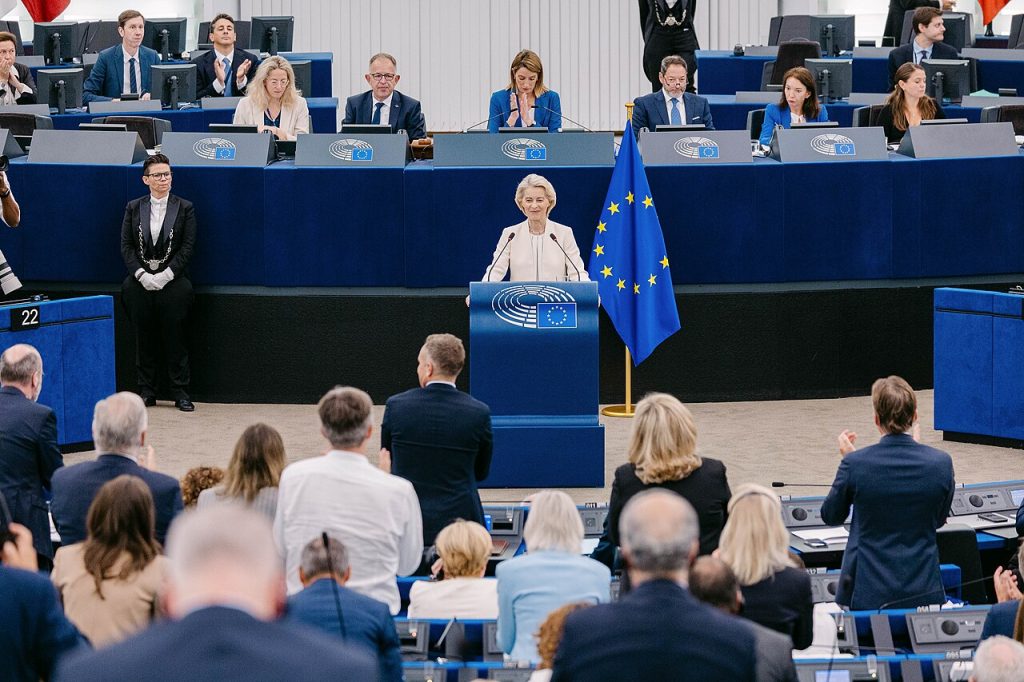
The initiative taken by the eleven European countries and Canada on September 8 was echoed a few days later by the EU Commission. In her 2026 State of the Union Address, delivered on September 16, European Commission President Ursula von der Leyen acknowledged the “deep suffering in Gaza and unchecked settler violence in the West Bank” and expressed disapproval for the “Israeli government’s decision to advance the illegal E1 settlement project.” She then lamented the lack of consensus among the EU member states on measures that would allow the development a unified European response and the advancement of a solution consistent with the values of the Union and the policy options advanced by the Commission. Von Der Leyen also maintained that it was “Europe’s role to keep the flame of a two-state solution alive.”

This more assertive position concerning the West Bank settlements is the latest step in a series of initiatives aimed at expressing a stronger and more consistent European voice concerning the Israel-Palestine question. In 2025, the United Kingdom, France, Portugal, Malta, Belgium, Luxemburg, Monaco, and Andorra – along with Canada and Australia – recognized Palestine as a state. Some European countries have also adopted much more confrontational stances. Ireland, Spain, and Belgium joined the proceedings initiated by South Africa against Israel before the International Court of Justice in relation to allegations that Israel violated the Convention on the Prevention and Punishment of the Crime of Genocide in the context of the Gaza War.
In sum, several EU countries, along with the UK and other international actors like Canada, are adopting an increasingly proactive stance towards the Israel-Palestine question and appear ready to support bold initiatives. This outlook, however, is not shared by all member-states of the EU.
Old School
In the years before the Gaza War, relations between the EU and its member states on one hand and Israel on the other were characterized by a dynamic of deepening economic, political, and security partnerships. For a variety of reasons, some European governments are still inclined to continue to pursue a policy of dialogue and cooperation, rather than confrontation, with the Netanyahu government.
In August 2026, the governments of Germany and Italy signed – along with France, the UK, the Netherlands, Norway, and Canada – a joint statement condemning the resumption of E1 and the expansion of Israeli settlements in the West Bank. Germany, Italy, and the Netherlands, however, have not recognized the Palestinian state. Germany and Italy, moreover, have also strongly opposed the use of the EU’s economic power to induce the Israeli government to guarantee the respect of human rights in the West Bank and Gaza.
The EU is Israel’s most important trading partner. As reported by the European Commission, the EU accounted for “31.7% of Israel’s total trade in goods with the world in 2025. 33.1% of Israel’s imports came from the EU, while 29.4% of the country’s exports went to the EU.” Trade between the EU and Israel is regulated by an Association Agreement. Human rights violations can lead to the suspension of the agreement. Article two reads that “[r]elations between the Parties, as well as all the provisions of the Agreement itself, shall be based on respect for human rights and democratic principles ,” while article 79.2 states that “[i]f either Party considers that the other Party has failed to fulfil an obligation under the Agreement, it may take appropriate measures.” In June 2025, Kaja Kallas, the EU’s High Representative for Foreign Affairs and Security Policy, reported that European institutions had evidence that human rights violations had been committed in the context of Israel’s war in Gaza as well as in relation to the country’s policy in the West Bank. The EU, however, has failed to take significant action, because any decision to suspend the agreement requires unanimous support among the member states of the Union. The German and Italian governments have consistently rejected calls for bolder action against Israel, and in April 2026, Italy and Germany opposed an initiative led by Spain, Slovenia, and Ireland to suspend the Association Agreement.

Germany has been a close supporter of Israel for reasons tied to the dark memories of the Holocaust, while Italy’s position has been traditionally more open to dialogue with the Arab world. The two counties’ attitude towards the Israel-Palestine question has recently converged due to a combination of factors. Governments in both Berlin and Rome consider it essential to preserve a close relationship with the United States. Hence, the two counties’ political outlook concerning the Middle East also reflects a concern to preserve the partnership with Washington. The US administration led by Donald Trump has staunchly supported the policies of the Netanyahu government, despite a difficult personal relationship between Trump and the Israeli Prime minister. Germany and Italy have thus tended to align with the Trump administration, and have limited their opposition to controversial Israeli policy initiatives to verbal statements. Moreover, both the government led by Friedrich Merz in Germany and the Italian government led by Giorgia Meloni are conservative, and it seems that domestic political orientation can have a significant role in shaping the attitude of European governments towards the Israel-Palestine question. As observed in a report published by the Center for the Study of Contemporary European Jewry of Tel Aviv University, governments led by progressive forces tend to be more sensitive to the Palestinian cause, while conservative governments tend to be more open to dialogue with Israel. The current Israeli government is the most right-wing executive in the history of the country, and many of the positions expressed by Netanyahu and other ministers have been echoed by conservative and right-wing populist leaders across Europe.

Other European countries appear to be determined to preserve a strong relation with Israel for strategic and geopolitical reasons. Two members of the European Union, Greece and Cyprus, are developing very strong political, economic, and military ties to Israel. The main factors driving this close partnership are shared interests in the development and exploitation of natural gas fields in the Eastern Mediterranean and a common rivalry with Turkey. In February 2026, Netanyahu speculated that these two EU countries could constitute key components of Israel’s effort to create a “hexagon of alliances” also including India, Ethiopia, and other African and Middle Eastern countries. In August, Greece and Israel signed a $3.5 billion defense agreement. According to this major defense deal, Israeli defense companies will build a new comprehensive air defense system that will help the Greek military protect the country from threats such as drones and ballistic missiles.
Which Way?
According to the Treaty on the European Union, the EU’s external policy should be driven by the principles of “democracy, the rule of law, the universality and indivisibility of human rights and fundamental freedoms, respect for human dignity, the principles of equality and solidarity, and respect for the principles of the United Nations Charter and international law.” Opinion surveys suggest that the citizens of the Union condemn both the terrorist attacks carried out by Hamas on October 7, 2023 and human right violations committed in the context of Israel’s military interventions in Gaza and the West Bank. However, Europe still struggles to speak with one voice and take significant action in relation to events in the Middle East. This lack of cohesion is due to several factors, including national identity, the political orientation of governments, geopolitical considerations, and national security priorities. These divisions are relegating the EU and its member states to a marginal role in the management of one of the most important crises affecting their security and identity. The countries of the EU must work together and with like-minded international partners to ensure that the Union can use its power and influence to shape the evolution of the Israel-Palestine question. What is at stake are the future and dignity of millions of people in Israel and the Palestinian territories, the goals and values of the EU, the expectations of European citizens, and the interests of the Union’s member states.
Diego Pagliarulo