An attack that changes many things
On the night between 28 February and 1 March 2026, the United States and Israel launched an unprecedented military offensive against Iran, striking the country’s main military infrastructures and nuclear sites and—through an impressive operation—eliminating Supreme Leader Ali Khamenei. It is an event that marks a watershed in the recent history of the Middle East and, more broadly, in the architecture of international relations. This is not a simple surgical operation, nor a one-off retaliation: it is an attempt to redraw the balance of power in a region that has been burning for decades with conflicts never truly resolved. The consequences are already unfolding with a speed and violence few analysts had expected, pulling into the vortex countries that were not part of the original conflict and raising profound questions about what will happen in the coming months—and in the coming years.
Iran’s response: destabilising the entire region
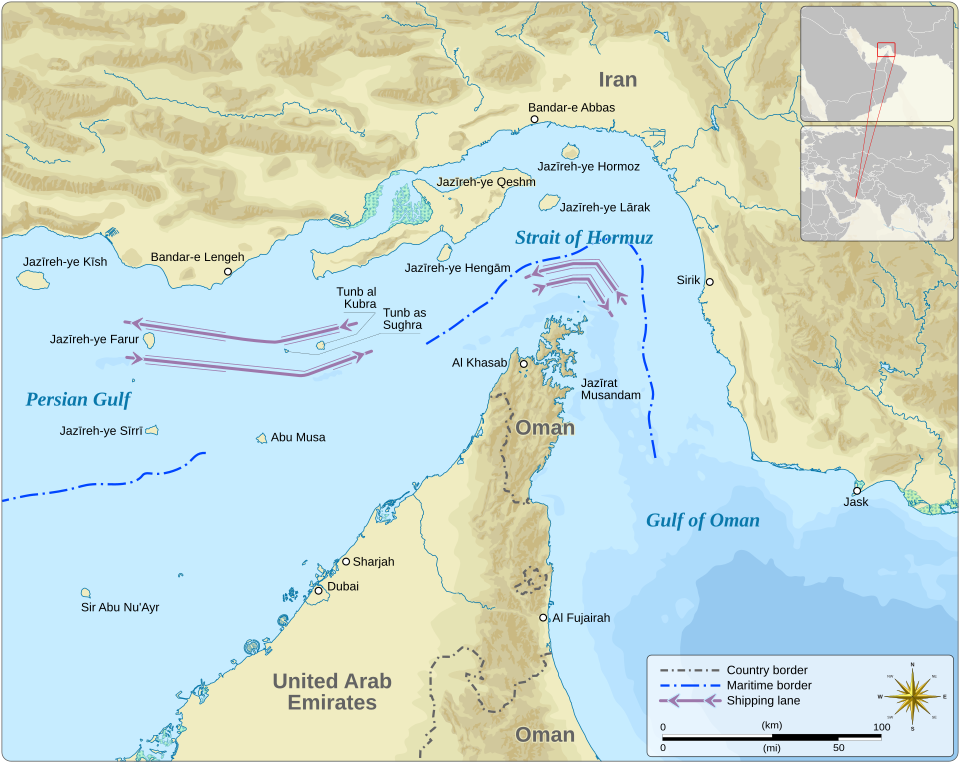
Iran’s reaction was swift, and predictable in logic if not in scale. Lacking conventional military capabilities to directly confront American and Israeli firepower, the Islamic Republic has resorted to the only weapon it has left: the destabilisation of the entire region. With a barrage of missiles and drones launched against Arab neighbours in the Persian Gulf (and beyond), Iran has sought to raise the political and economic cost of the operation for the US by drawing as many actors as possible into the crisis and multiplying open fronts. This is a strategy long anticipated by those who know the regime well: Iran cannot win a conventional war, but it can turn any conflict into a slow, unbearable haemorrhage for anyone within range. The results were immediate and devastating. Qatar saw its strategic energy infrastructure hit; Saudi Arabia suffered attacks on its largest refinery; shipping through the Strait of Hormuz has come to a halt. This escalation has dragged not only the Gulf countries but the entire global energy market along with it.

The energy cost: Qatar and Saudi Arabia in the crosshairs
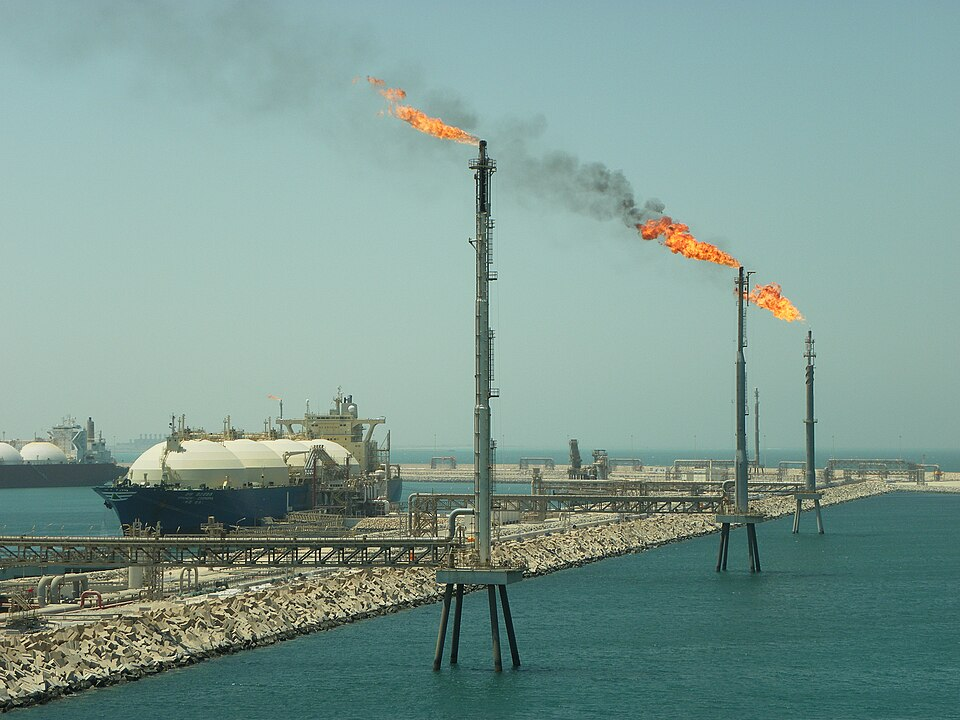
The most immediate economic impact has come through energy. On 2 March, QatarEnergy—the state company that manages all the country’s liquefied natural gas exports—announced a complete suspension of LNG production after Iranian drones struck facilities at Ras Laffan Industrial City and Mesaieed Industrial City. Ras Laffan is not just any plant: it is the largest LNG export terminal in the world, with a capacity of about 80 million tonnes per year, roughly a fifth of total global LNG supply. In 2025, QatarEnergy exported nearly 81 million metric tonnes of LNG to world markets, with Asia as the main destination and Europe as the leading buyer in the West. The shutdown of this hub is not a marginal event: it is a systemic shock.
Meanwhile, Saudi Arabia has had to halt some units at the Ras Tanura refinery, located on the Gulf coast near Dammam. It is one of the largest oil facilities in the world, with a processing capacity of about 550,000 barrels per day and long considered a pillar of the Saudi energy sector. A fire broke out after Iranian drones were intercepted, and the facility was shut as a precaution.
Market reactions were instantaneous. Dutch natural gas futures—the European benchmark—jumped 46% in a single session, reaching their highest levels since February 2025. UK gas spiked 50%. Oil prices surged more than 13% intraday, climbing above $82 a barrel. For Europe, already battered by years of energy crises and forced to pay for US LNG at prices two to four times higher than Russian pipeline gas, this is yet another devastating blow to the continent’s already fragile industrial base.
The American strategy: unclear objectives
Politically and militarily, the Trump administration’s strategy appears uncertain in its long-term goals. Toppling the Iranian regime with air strikes alone—without “boots on the ground” and without an internal organisation ready to take power—is an attempt with anything but a guaranteed outcome. Recent Middle Eastern history, from Iraq to Libya, shows that removing a regime does not automatically create stability. Iranian society is deeply weary of the theocracy, but the fear of taking to the streets remains extremely strong in a country that has seen every form of dissent crushed in blood. Without a credible political alternative and without soldiers on the ground capable of guaranteeing even a minimum of order, the real risk is leaving an enormous power vacuum in one of the world’s most strategically important countries.
Not to consider that transatlantic relations are increasingly strained by the crisis. Spain has openly expressed doubts about the intervention’s legitimacy, a stance driven not only by domestic political calculations but also by a genuinely different view of international law. Tensions with the United Kingdom have also sharpened: Trump accused Prime Minister Keir Starmer of lacking Churchill’s courage and determination for refusing to allow the use of British bases for strikes on Iran—an allegation to which London responded in coolly diplomatic tones. On the other hand, the message from the US President to Europe, and to the EU in particular, has been clear: no consultation, no decision-making power. The problem is that it is largely Europe that bears the consequences of decisions made elsewhere.

Trump’s domestic political risk: the MAGA factor
There is also a crucial variable that could reshape the situation within months: US domestic politics. The midterm elections are approaching, and the MAGA movement’s base has always shown deep suspicion of overseas military commitments, especially when they drag on and produce high costs in lives and resources. Trump knows that his support is tightly tied to the perception of an America that is strong but not bogged down in costly wars. If the conflict in Iran drags on without clear results, without a rapid transition of power, and without a troop withdrawal (assuming troops are even deployed), the risk of eroding his base is real. A long, opaque conflict without a visible victory is exactly the scenario that could fracture the MAGA front and weaken Trump at a politically delicate moment.
Netanyahu: the big winner (for now)
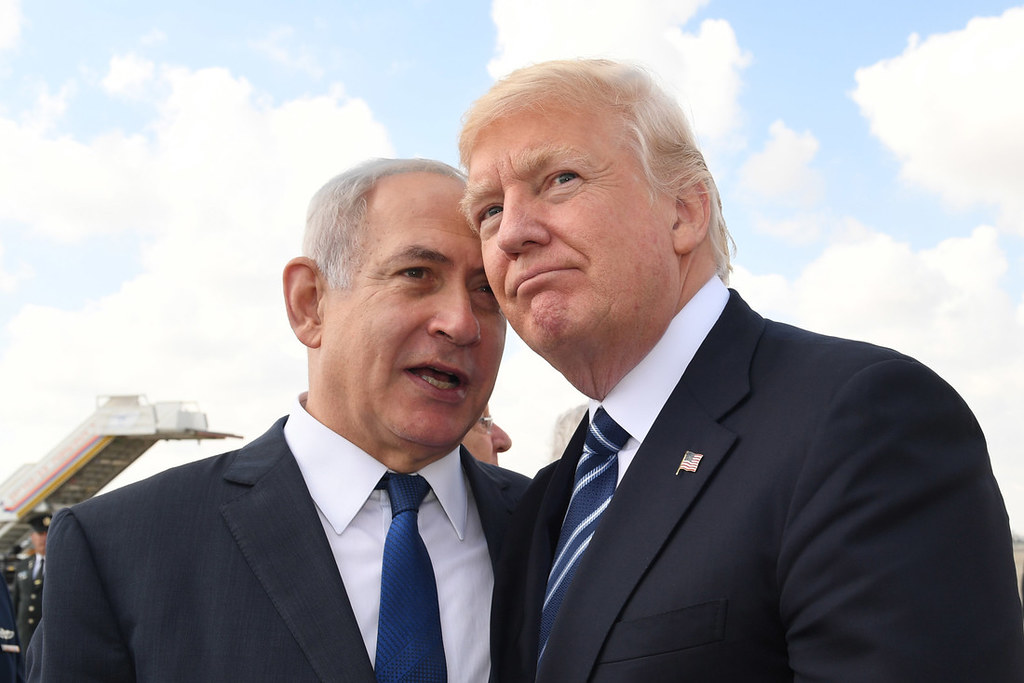
The figure who appears to benefit most from the current situation, at least in the short term, is Benjamin Netanyahu. The Israeli Prime Minister has long argued that Israel’s true strategic objective should be the fall of the Islamic Republic, to be replaced by a more co-operative and less hostile government. A post-Islamic Iran—or even simply a destabilised Iran— would weaken the main sponsor of Hamas, Hezbollah, and Shiite militias in Iraq and Syria, leaving Israel as the dominant pole in the region. For Netanyahu, this is also an electoral year: a vote is expected by October, and a victory perceived as historic in Iran could push him to call early elections, presenting himself to Israelis as the leader who changed the country’s fate. This would allow him, therefore, to once again avoid the various legal proceedings—including the Qatargate case—in which he is currently involved. The conflict further helps to redirect the international attention, saturating the global diplomatic and media agenda with a spectacular high-intensity confrontation, thereby obscuring what is unfolding through a slower, more imperceptible process—and, precisely for that reason, a more definitive one: the progressive incorporation of Gaza, the West Bank, and East Jerusalem into the permanent sphere of Israeli state control. On the northern frontier, southern Lebanon has once again become an active theatre of military operations, following the incursion of Israeli army units into Lebanese territory in recent days, in what Israel characterises as a pre-emptive measure targeting Hezbollah’s operational infrastructure. The declared scope of the operation has been left deliberately ambiguous, thereby reopening the prospect of a protracted military presence—as was the case during the occupation of 1982 to 2000. This parallel operation involves an even less visible strategic contest: the consolidation of Israeli control over the entirety of the Syrian Golan Heights, unilaterally annexed in 1981. In the wake of the collapse of the Assad regime and the ensuing fragmentation of the Syrian state, Israeli leadership perceives this as a historic window of opportunity to extend its strategic footprint de facto well beyond the boundaries established in 1967.
It should be noted, however, that the regional political picture is more complicated than it seems. Türkiye, an emerging power and an increasingly assertive actor in the region, is watching developments closely. The Turkish government does not look favourably on an Israel whose regional role is enlarged, and potential tensions between Israel and Türkiye—particularly over the Kurdish question and Syria’s future power balance—could reduce Israel’s room for manoeuvre.
Russia: winner or loser?
Another beneficiary, less visible but no less real, is Vladimir Putin’s Russia—at least in the short term. Any crisis-driven increase in oil prices translates into higher revenues for the Kremlin at a time when Western sanctions have already narrowed profit margins for Russian energy exports. In 2025, Russia exported about 238 million tonnes of oil—equivalent to roughly 4.8 million barrels per day—with 80% of supplies directed to China and India. A persistently high crude oil price mitigates sanctions pressure and strengthens Moscow’s capacity to finance the war in Ukraine. The closure of the Strait of Hormuz and tensions in the Gulf also reduce available supply for Asian markets, further increasing Russia’s bargaining power with its main buyers.
From the perspective of regional geopolitical projection, it is necessary to examine closer the effects for Moscow’s interests. The loss of Iran as a strategic partner would represent a significant erosion of the Russian Federation’s credibility and capacity for influence across the MENA region—a setback that would compound an already critical trajectory, further aggravating the consequences of the collapse of the Assad regime in Syria. The accumulation of these two strategic failures could prompt the Kremlin to undertake a substantial reassessment of its extra-European geopolitical priorities, redirecting its focus toward the African continent, where Moscow has invested considerably in recent years through para-statal instruments and bilateral agreements, operating within an explicitly anti-Western, anti-EU, and anti-NATO ideological framework. A second dimension, operational and military in nature, must also be considered. The continuation of the Israeli-Iranian conflict introduces growing elements of instability into the supply chains upon which Russia has relied in the context of the war in Ukraine. Iranian-manufactured Shahed drones have constituted a tactically significant component of Russian military operations targeting Ukrainian infrastructure and armed forces. A prolonged destabilisation of Iran—or its potential withdrawal as a reliable supplier—would considerably reduce the availability of these systems, with potentially material consequences for Russia’s operational effectiveness on the Eastern European front.
Europe: a powerless spectator
Europe appears to be one of the major losers of this crisis. The continent suffers US decisions without having any voice, and is scrambling to contain potentially enormous economic damage. The loss of Qatari LNG, the closure of the Strait of Hormuz, and the spike in energy prices strike directly at a European industry already under strain, unable to compete globally due to high energy costs. Europe’s lack of political weight in the dynamics of the crisis is not merely a temporary weakness: it reflects years of reduced defence investment, internal divisions, and a structural dependence on the United States that today proves to be a decisive strategic handicap. This crisis once again highlights both the current and future threats to Europe’s energy supplies and storage capacity, while also risking a paradoxical outcome: as developments on the ground evolve, Russian gas may regain renewed centrality.

China between losses and pragmatism
China is not smiling either. In 2025, Chinese refineries bought on average about 1.38 million barrels per day of Iranian oil—around 13-14% of China’s total crude imports, according to Kpler data—which now disappears from the market or must be replaced at much higher prices. For an economy with chronically high energy demand and perpetually growing, rising production costs spill over into export prices, gradually eroding China’s competitiveness on global markets, particularly in Europe. China reacted with its usual institutional composure, condemning the attacks in the name of respect for international law. But concrete signals speak clearly: the Chinese government decided to suspend exports of refined hydrocarbons outside its borders, a move that indicates how seriously the crisis is being assessed in Beijing. China has also built significant strategic oil reserves in recent years—with average stock builds in 2025 estimated by Rystad Energy at about 430,000 barrels per day, five times 2024 levels—showing that the government had prepared for a supply-interruption scenario, in the hope it would never have to rely on those reserves. At the same time, there is a geostrategic factor that clearly favours Beijing. In the Pacific region, it can take advantage of wider—and unexpected—room for manoeuvre and action, with the United States fully engaged in the Middle Eastern theatre of war. This also allows China to plan carefully for an offensive against Taiwan, which, in a context where the right to use force outweighs the force of law, would be extremely difficult to counter.
Conclusion: when force wipes out the rules
Finally, a larger issue is at stake: the future of the international order. After the intervention in Venezuela, the attack on Iran represents another qualitative leap in the Trump administration’s—and Israel’s—disregard for the norms of international law. It is true that in this case the target is a regime responsible for grave crimes against its own population, for financing terrorism, and for decades of regional destabilisation. But the manner of intervention—unilateral, without a United Nations mandate or a legitimised international coalition—could encourage others to do the same.
Russia invaded Ukraine on the basis of what it considered an immediate strategic interest, disregarding any shared rules. The moral difference is obvious—one is a sovereign democracy, the other an autocratic regime—but the underlying principle is the same: those strong enough can do what they want, and international law becomes something to invoke when convenient and ignore when not. This may prove to be the most lasting damage of the entire affair. Over decades of arduous construction, the ecosystem of international law had at least partly offered some solutions to international crises. It was an imperfect system, full of contradictions and double standards, but it existed.
When two permanent members of the UN Security Council lunch wars without any international mandate, and without considering the effects at the global level, the message is that we live in a world where only power relations matter again.
The end of Iran’s dictatorship would be a positive outcome for everyone, above all for Iranians. However, violating the fundamental principles governing international relations could pose, in the near future, a significant threat to global stability.
Francesco Anghelone