
On May 17, Mahmoud Abbas, the current president of the Palestinian Authority, was confirmed as the leader of Fatah, the political force that dominates the government structure of the Palestinian territories. Fatah’s first congress in a decade started on May 15 and ended on May 17. The most newsworthy development form the congress, however, was the fact that Abbas’s son Yasser (who is 64 as these lines are written) won a seat in Fatah’s top decision-making body – the central committee. Yasser Abbas is a businessman and spends most of his time in Canada. The news of his appointment to a top Fatah position has been interpreted as a move on the part of his 90-year old father to tighten his grip over the Palestinian political movement originally led by Yasser Arafat and favor his son’s rise within the party.

A strong, democratic, and accountable Palestinian Authority is an essential component in any serious plan to guarantee the security and well-being of the Palestinian people. Better governance and the prospect of a viable state for the Palestinians can also represent a crucial contribution to the effort to end conflict and terrorism in Israel and Palestine and restore geopolitical stability in the Middle East. Unfortunately, as these lines are written, the Palestinian Authority faces an intricate set of challenges that are deeply undermining hopes to implement the peace process, ensure a state for the Palestinians, and end the vicious cycle of violence and conflict that is devastating the Middle East. The most crucial but intractable challenges appear to be weak governance within the PA itself, division and conflict among the main Palestinian political forces, and persistent Israeli occupation of the Palestinian territories – aggravated by an expanding and often violent settler movement.
Weak and Divided
The Palestinian Authority – or PA – was created in 1994 as part of the Israeli-Palestinian peace process started by the Oslo Accords. The goal was to provide the Palestinian territories with a government structure that could serve as the institutional nucleus of a future Palestinian state to be created in the West Bank, East Jerusalem, and the Gaza Strip following Israel’s withdrawal from the territories occupied since the Six Day War of 1967.
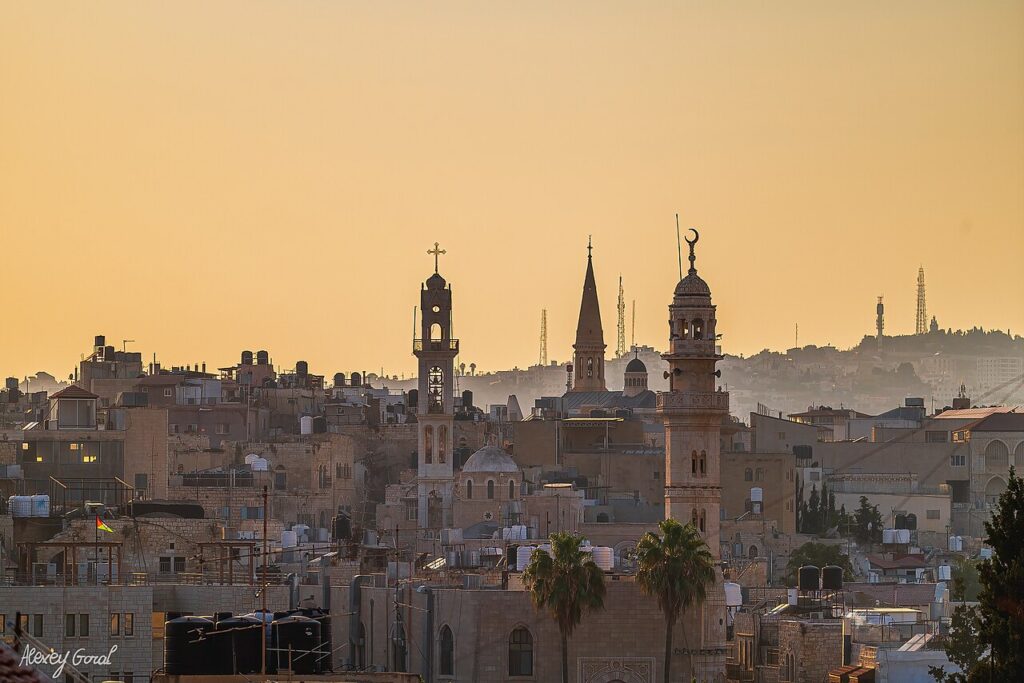
Fatah, the leading force within the Palestine Liberation Organization, has been the dominant component of the Palestinian Authority since its creation, although its position has become increasingly challenged. Fatah was led by Yasser Arafat – the controversial but charismatic leader of the Palestinian national movement – until his death in November 2004. Mahmoud Abbas – a close associate of Arafat’s and a supporter of the peace process with Israel – then took over the leadership of both Fatah and the PA. Under Abbas’s rule, however, the difficult effort to democratize Palestinian politics unraveled. Hamas won a majority of seats in the PA’s Legislative Council in 2006 and this unexpected result led to increasing international isolation for the PA as well as infighting between Hamas and Fatah. This process culminated in a sort of civil war between the main Palestinian factions that left Fatah in charge of the PA in the West Bank and Hamas in control of the Gaza Strip – until the terrorist attacks of October 7, 2023. Even after the de facto partition of the Palestinian territories, tension and rivalry between Palestinian groups continued and periodically degenerated into armed clashes. Between late 2024 and early 2025, for example, the PA launched a major security operation codenamed “Protect the Homeland” in the Jenin area in order to suppress local militias as well as infiltrations by Hamas and other terrorist organizations based in Gaza.

In the aftermath of the 2006-2007 crisis, Abbas promised to hold new legislative and presidential elections. These promises, however, have not been fulfilled. In the meantime, Abbas’s rule became more and more autocratic, and the PA became increasingly corrupt and repressive. At the same time, as Israel’s occupation of the West Bank and East Jerusalem persisted, Fatah and the PA started to look increasingly as a collaborationist regime in the eyes of many Palestinians.
Hamas’s rule in Gaza followed an even more brutal path. The organization created an extremely repressive regime in the lands under its rule. Summary and extrajudicial executions became one of the tools used by Hamas to exercise control, along with other forms of brutality such as torture. Violence has often been practised in public spaces and has been directed in particular towards Palestinians suspected of collaboration with Israel. As these lines are written, Hamas remains in control of part of the Gaza Strip, and repression remains a policy adopted to govern the area. According to a report issued by the UN Human Rights Council, between August 2024 and January 2026, at least 108 Palestinians were killed and 384 injured as a result of extrajudicial punishment perpetrated by Hamas’s military wing or other paramilitary organizations affiliated with the group.
Unsurprisingly, Palestinians seem to have profound distrust for their main political forces and their leaders. A public opinion survey carried out at the end of 2025 indicated that both Hamas and Fatah were highly unpopular, although it appeared that in a national election Hamas would obtain a higher share of the vote than Fatah. However, Fatah-backed candidates prevailed in local elections held in late April 2026 in the West Bank and the Gazan city of Deir al‑Balah. These elections were important because they represented the first vote in the Palestinian territories since 2006, although the turnout was rather low, especially in Deir al-Balah. The 2025 survey also indicated that both Abbas and Khaled Mashal – Hamas’s interim leader – were quite unpopular, but it appeared that the Hamas leader would prevail in an electoral contest for the presidency of the PA. Hamas has recently started a voting process to appoint a new leader. The two main candidates for the position appear to be Mashal and Khalil al-Hayya. The most popular Palestinian leader, however, appears to be by far Marwan Barghouti, who holds a solid lead over both Fatah and Hamas leaders but is currently detained in Israel under extremely harsh conditions.
Occupation and Settlements
Israel’s occupation of the West Bank and East Jerusalem, as well as a substantial part of the Gaza Strip, represents an equally intractable obstacle to the development of an economically sustainable and politically consistent Palestinian state. This occupation is the result of the failure to implement the Oslo process and, more recently, Israel’s military operations in response to the terrorist attacks perpetrated by Hamas on October 7, 2023.
The Oslo process divided the Palestinian territories – and the West Bank in particular – into 3 different areas. The first – Area A, equivalent to around 18% of the territory of the West Bank and including the most important urban centers – would be immediately placed under PA control. Area B – roughly 22% – would be administered by the PA but security matters would be managed by Israel. In Area C – more than 60% – Israel would remain in charge of both security and administrative tasks. The Oslo process stipulated that Israel would gradually withdraw from Areas B and C in order to implement a “two-state” solution and allow the creation of a Palestinian state in the West Bank, the Gaza Strip, and East Jerusalem. This arrangement, however, was never implemented. Israel evacuated the Gaza Strip in 2005 but kept an extremely tight control over access to that territory. The withdrawal from Areas B and C and East Jerusalem was never implemented.

The areas occupied by Israel since the Six-Day War of 1967 also experienced a proliferation of Israeli settlements. While settlements in the Gaza Strip were dismantled as a result of the 2005 withdrawal, those in the West Bank and East Jerusalem have in fact expanded. As these lines are written, it is estimated that almost 738,000 settlers live in the Occupied Palestinian Territories – around 504,000 in the West Bank and slightly less and 234,000 in East Jerusalem. These settlers reside in approximately 147 “settlements” and 224 “outposts.” As clarified by the International Court of Justice in a 2024 advisory opinion, all settlements and outposts are illegal under international law and must be dismantled. Many settlements are illegal even under Israeli law. In addition, the settlements are clearly incompatible with the peace process and the two-state solution.
Israeli authorities, however, have not been able or willing to dismantle the settlements. The current Israeli government, led by Benjamin Netanyahu in a coalition featuring extreme right-wing parties, has in fact been openly supportive of the expansion of the settlements. The Netanyahu cabinet has approved dozens of new settlements and invested $340 millions in the building of infrastructure – such as roads to connect the settlements. In June 2026 the Israeli government also appeared intent on allocating additional millions of dollars in an effort to expand settlements in the West Bank and consolidate positions before the Israeli national elections – that must take place by the fall of 2026.
Settlers are also becoming increasingly violent against the Palestinian population. The October 7, 2023 terrorist attacks perpetrated by Hamas against Israel have led to an increase in settler attacks against the Palestinian population of the West Bank. As reported by the UN Human Rights Council, at least 26 Palestinians were killed and 1,570 injured by settler violence between January 2023 and December 2025. Instead of discouraging the use of violence, the Netanyahu government has tolerated settler attacks against the Palestinians, and National Security Minister Itamar Ben-Gvir – a resident of the settlements – has even allowed the distribution of weapons to the settlers and encouraged the formations of militias. Settler violence often goes unpunished and in some cases Israeli military forces deployed in the Palestinian territories tend to tolerate it or intervene on behalf of the settlers if the Palestinians retaliate. The war in Iran appears to have favored a further increase in violence. In April 2026, attacks against the Palestinians became so frequent and alarming that Maj. Gen. Avi Bluth – the chief of the Israel Defense Forces Central Command – warned that what he described as “Jewish terrorism” could reach a breaking point and ignite a Palestinian revolt in the West Bank. In some cases, settler violence is even directed against Israeli military personnel deployed in the West Bank if their actions are perceived as not benevolent enough towards the settlers.
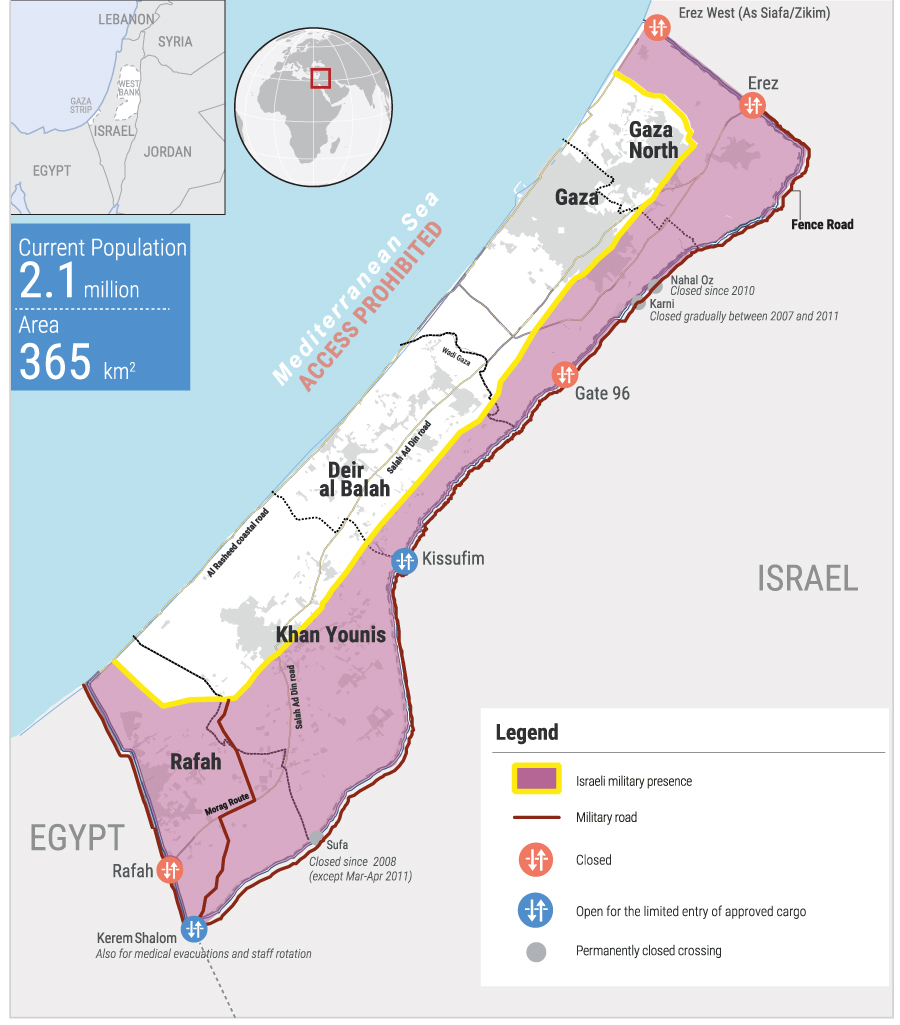
Since its military intervention in the aftermath of the Hamas terrorist attacks of October 2023, moreover, Israel has reestablished a very strong presence in the Gaza Strip. The “Comprehensive Plan to End the Gaza Conflict” developed by the Trump administration and endorsed by the UN in the fall of 2025 stipulates that Israel must withdraw from the Gaza Strip and favor the deployment of a multinational peacekeeping force and then the establishment of a technocratic body to govern the area. The plan also calls for “a credible pathway to Palestinian self-determination and statehood.” These provisions, however, have not been implemented. The October 2025 ceasefire left Israel in control of around 53% of the territory of the Gaza Strip. As these lines are written, Israel’s control has expanded to more than 60%. On May 28, Netanyahu announced that his government had instructed the IDF to take control of 70% of the territory of the enclave. The vast majority of the population of Gaza – around two million before the war – is currently squeezed into the area controlled by Hamas in extremely hard humanitarian conditions. Among other things, the tragically low levels of hygiene in the Strip have favored the rise of an uncontrolled proliferation of rodents.
A recent report published by the UN Human Rights Council captures the desperate situation for the Palestinians. As observed in the report, Palestinians in the West Bank are victims of settler violence tolerated or even enabled by the Israeli government, while those in the Gaza strip must endure the fear-based rule of Hamas.
Strengthening Palestinian Governance: A Moral and Strategic Imperative
Strengthening Palestinian governance is both a moral and a strategic imperative for the PA, Israel, and the international community as a whole. The Palestinian leadership has become autocratic and repressive. It has failed to meet the expectations of its people and is now divided and debilitated by infighting. The failure to implement the Oslo process has discredited the most pragmatic Palestinian factions and empowered radical and terrorist organizations. This dynamic created the preconditions for the October 7, 2023 terrorist attacks.
Israel’s military response to the October 7 attacks has generated enormous destruction as well as a horrifying number of victims – more than 73,000 deaths, including more than 21,000 children. In spite of these massive levels of death and destruction, Hamas is still dominant in the Gaza Strip. At the same time, the expansion of settlements in the West Bank and the increasing number of violent actions taken by some settlers, along with the failure to punish these attacks on the part of Israeli authorities, are further discrediting the PA and driving further radicalization of the population of the West Bank.
Breaking this vicious cycle is vital to ensure both Israel’s security and a better future for the Palestinians. Only a stronger and more accountable Palestinian Authority, as well as progress towards the creation of a democratic and prosperous Palestinian state, can achieve the goal of eliminating Hamas and other terrorist organizations that capitalize on the misery and resentment that pervades Palestinian society. The construction of a sustainable, democratic Palestinian state is crucial to give the Palestinians dignity and self-determination, eliminate terrorism, and end the Israeli-Palestinian conflict.
Diego Pagliarulo