
The conflict that started on February 28, 2026 with attacks by the United States and Israel against Iran has had tremendous human and economic costs. Estimates indicate that around 3,000 Iranians lost their lives between late February and the fragile ceasefire reached on April 8. At least 1,830 people were killed in Lebanon and more than 100 in Iraq. 23 people were killed in Israel and 13 American soldiers lost their lives. The list includes deaths in the Persian Gulf states as well as Syria and the West Bank. The death toll, moreover, has continued to rise despite the extension of the ceasefire and the ongoing negotiations.
The economic consequences of the war have been massive as well, with tremendous repercussions on both a regional and a global scale. The closure of the Strait of Hormuz, in particular, has generated an energy crisis of historic proportions. Around 20% of the world’s oil supply flows through this critically important waterway. The supply disruption has had strongly negative consequences for many Asian countries that rely heavily on Middle Eastern oil. According to estimates by the IMF, a protracted conflict in the Persian Gulf and an oil price above $100 a barrel might induce a slowdown in the global economy comparable to the COVID-19 crisis.

Insider accounts suggest that US President Donald Trump, Israel’s Prime Minister Benjamin Netanyahu, and many of their top advisers, expected the conflict to be short and decisive. The war, however, lasted more than one month and negotiations have proven extremely hard, with Iranian leaders refusing to make concessions on the reopening of the Strait of Hormuz and the Tehran regime’s nuclear program.
This protracted confrontation is forcing American and Israeli leaders to face severe economic consequences. Israel entered the conflict with an economy that had already been significantly challenged by more than two and a half years of war on multiple fronts. The situation looks dire for the United States as well. Despite having the largest economy and military budget in the world, even the US is paying a hefty price for this war of choice against Iran.
A Tale of Two Nations: The Strengths and Weaknesses of Israel’s Economy
With a nominal GDP of $540 billion and a per capita GDP of $54,000, Israel is a regional economic power as well as one of the most dynamic and innovative economies in the world. The country is also characterized by rather favorable overall demographic trends, with a population that is quite “young” compared to other advanced economies. Israel is also globally recognized as a leading “Start-Up Nation.” Its hi-tech sector employs highly qualified and entrepreneurial people and contributes to one third of the country’s income tax revenues and 37% of the value of its exports. Israel’s technological edge has important repercussions for the country’s defense industry as well. In 2024 Israel was the eight largest arms exporter in the world while three Israeli companies were in the top-40 list of highest-earning defense companies.

Despite these outstanding data, the Israeli economy also shows some important limits. As a matter of fact, the hi-tech sector only employs around 400,000 people – a relatively small fraction of Israel’s workforce of 4.7 million. Compared to other major industrial economies, Israel has a high level of economic inequality and stands out among the members of the OECD for its rather small middle-class. This dualism is further reinforced by the fact that important segments of Israeli society – Israel’s Arab population and Ultra-Orthodox Jews – are socially, economically, and politically marginalized. These two communities represent around 21% and 14% of the country’s population respectively. Ultra-orthodox Jews tend to focus their educational paths on religious studies and other subjects that are not compatible with the most remunerative careers in sectors such as high technology. Israel’s Arab population has suffered from systematic marginalization while access to professions that are linked to national security – such as the military, the defense industry, and the hi-tech sector – is de facto precluded. Hence, for political and cultural reasons, both the Arab and the Ultra-Orthodox Jewish communities tend to have lower levels of education and income as well as higher levels of unemployment.
From Startup to Sparta: The Economic Consequences of Israel’s Wars
The Israeli economy has proved to be rather resilient in response to the shock of the October 7, 2023 terrorist attacks perpetrated by Hamas and the series of intense and bloody conflicts that followed. However, this short-term resilience is compounded by a growing fatigue that suggests that Israel’s military efforts cannot be sustained indefinitely and are in fact severely distorting the country’s economy.
According to OECD estimates, after a collapse in late 2023 and 2024, Israel’s GDP grew in 2025 by 3.3% and – before the US-Israeli attack against Iran in late February 2026 – this economic recovery was expected to continue. The unemployment rate went down in 2024 and reached 2.9% in 2025. In the meantime, restrictive monetary policies managed to keep inflation low – albeit slightly above the target rate of 3%. During 2025, the Tel Aviv stock exchange performed better than other major financial centers such as London and New York. Financial markets reacted in a particularly positive way to the end of the “Twelve-Day War” against Iran in June 2025 and the announcement of a ceasefire in Gaza in October of the same year.
However, intensive military engagements and operations on multiple fronts – including Gaza, the West Bank, Lebanon, Iran, and the Red Sea – have had a very significant impact on Israel’s economy. Military expenditure jumped from 4.4% of GDP in 2022 to 8.8% in 2024. The mobilization of more than 300,00 reservists had a severe impact on the county’s workforce. The IDF is designed as a “people’s army.” This model allows Israel to mobilize a large number of soldiers and has served the country very well in short, conventional military confrontations with its neighbors. However, this model has not worked very well against unconventional non-state actors such as Hezbollah and Hamas, and does not seem adaptable to the requirements of an open-ended conflict. At the end of March, General Eyal Zamir – the Chief of Staff of the IDF – warned that the Israeli military machine was “going to collapse in on itself” due to the pressure of fighting on multiple fronts as well as the intensive nature of operations in theaters such as the West Bank.

According to the estimates of the Bank of Israel, by February 2026 the direct military costs of the war in Gaza amounted to $77 billion. Israel received around $21.7 billion in US economic assistance since October 2023 but American support was not enough to offset a massive deterioration of Israeli finances. The country’s budget went from a slight surplus in 2023 to a massive deficit of 8% in 2024 and 5.4% in 2025. The debt to GDP ratio jumped from 61.6% in 2023 to 68.3 in 2025. International rating agencies downgraded their outlook concerning Israel, with a slight recovery in the aftermath of the October 2025 ceasefire. Since 2023, moreover, Israel appears to have become a less attractive destination for immigrants. This trend seems particularly concerning from a long-term growth perspective, since many high value Israeli tech companies have been founded by immigrants. Despite some GDP growth and a strong stock market performance, more than two and a half years of war have severely undermined Israel’s economic fundamentals as well as the country’s potential as a “Start-Up Nation.” Israel appears to have turned into a sort of modern-day Sparta that is consuming its best talents and social fabric in an endless and unsustainable series of military engagements.
The Cost of War With Iran
It is still too early to have comprehensive and accurate assessments of the immediate and long-term economic impacts of the war in Iran. The available data nonetheless strongly suggests that the conflict is having significant repercussions for the US and Israel. By mid-April, Israel’s Finance Ministry estimated the cost of war with Iran at $11.52 billion. Official estimates by the Pentagon indicate that the first two months of conflict against Iran cost the US $25 billion. Other assessments indicate that by late April, the Iran war had cost the US between $28 billion and $35 billion – somewhere between $700 and $900 million a day for a military operation that started on February 28 and was suspended thanks to the April 8 ceasefire. These figures include severe damage caused by Iranian strikes to US military bases and equipment in the Middle East. It is now clear, moreover, that the rate at which the Tehran regime can replenish its stocks of drones and other relative cheap but effective weapons is faster that the rate at which the US and Israel can rebuild their supplies of interceptors and other advanced weapons systems that were used during Operation Epic Fury/Roaring Lion to attack Iran and protect US forces, Israel, and America’s regional partners. Experts are also expressing serious concerns about the risk that such a high rate of attrition may substantially diminish US deterrence and warfighting capabilities in other critical regions such as the Indo-Pacific.
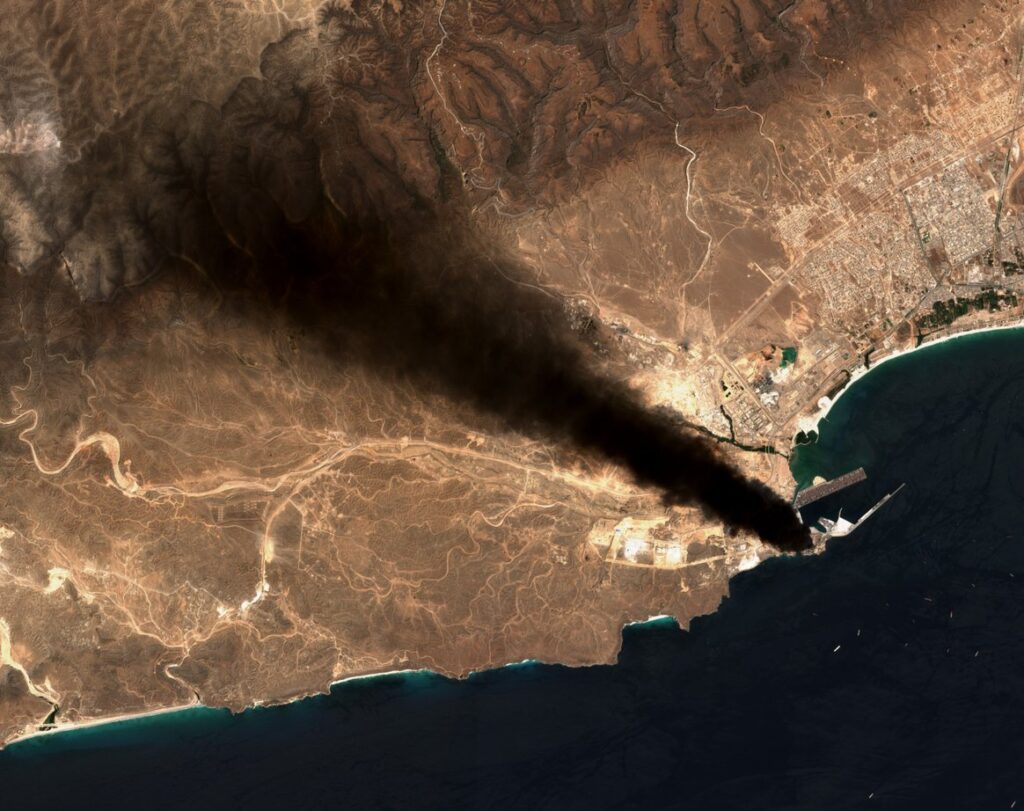
The increase in the oil price on the global market has had major repercussions for the US economy. Gas prices have gone up across the country, surpassing the threshold of $4.5 per gallon on average – with a peak of more than $6 per gallon in California. The increase in the price of fuel is driving a steep rise in inflation that is particularly painful for lower-income Americans. The negative economic effects of the conflict are reinforcing popular disapproval for military intervention against Iran. This trend is dramatically bringing down Trump’s approval ratings and is increasing the risk of a very poor performance for the Republican Party in the forthcoming midterm elections. Polls suggest that Netanyahu’s coalition will lose seats in this year’s national election and might not be able to hold a governing majority in the Knesset – Israel’s parliament. Israel’s public opinion seems to be pessimistic about the national security implications of an early end of the conflict with Iran. This may tempt Netanyahu to oppose negotiations and push for a resumption of hostilities. It seems clear, however, that the war is extracting a tremendous price on Israel’s economy and military power. Failure to coordinate with Washington, moreover, may compromise Israel’s relationship with its most important military and political partner. At the same time, Netanyahu’s military interventions in Gaza, Iran, and Lebanon, compounded by settler violence in the West Bank and extremely brutal policies against international supporters of the Palestinian cause are undermining relations with the EU, Israel’s most important economic partner.
The Spartan Trap
The Middle East is tragically affected by multiple and intertwined security challenges, such as brutally repressive regimes, deep-seated regional rivalries, and terrorism. In such a difficult environment, military power becomes a vital tool to ensure survival as well as the protection of vital national interests. Israel has built a very powerful and effective military machine that features world-class aviation, special forces, intelligence, cyber capabilities, and even a nuclear arsenal – although the country does not officially acknowledge its existence. As the most prominent global power, the United States has by far the most powerful military in the world. American military power has been a fundamental factor in advancing US national interest and protecting allies in the Middle East.
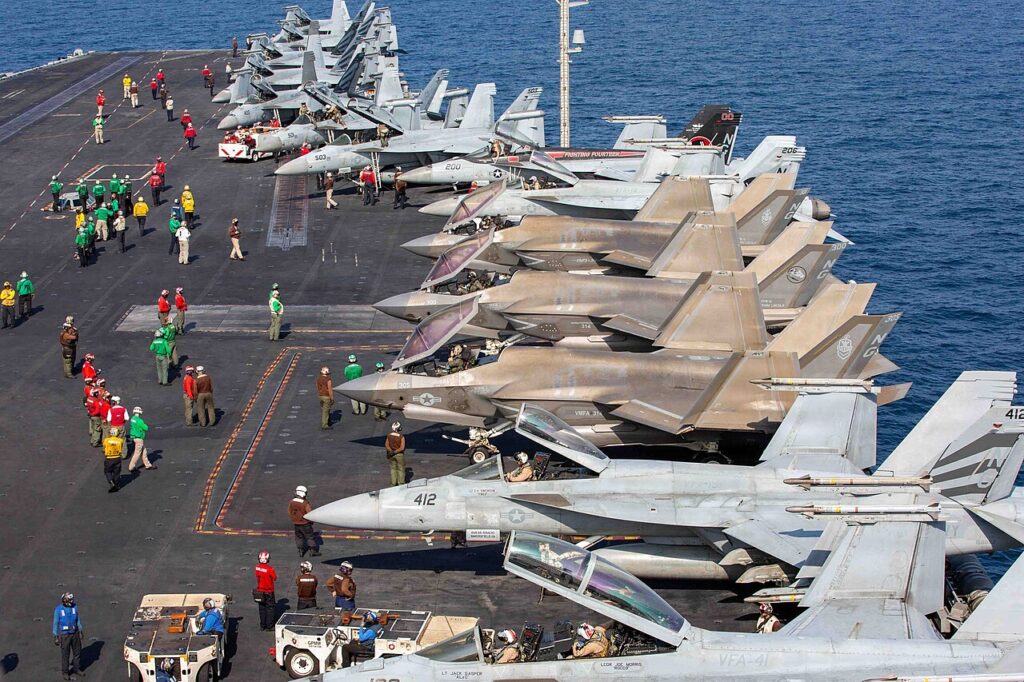
Military power, however, should be conceived as a last resort and an instrument of deterrence rather than a policy of choice. Israel’s current leaders have consistently opposed the Israeli-Palestinian peace process and the creation of a Palestinian state. This attitude has been compounded by a security strategy that emphasizes military interventionism on a regional scale and confrontation against Iran. The shock of the horrific October 7, 2023 attacks perpetrated by Hamas has further reinforced this strategic approach and taken it to extreme and unsustainable levels.
Israel’s security doctrine under Netanyahu is taking the shape of an open-ended state of conflict. This approach is having tremendous economic costs and tragic humanitarian repercussions for the Middle East, but so far has not defeated Israel’s enemies. Hamas is still standing in Gaza, just like Hezbollah in Lebanon. Iran has been severely damaged by Israeli and US attacks but the country’s leadership has proved to be much more resilient than expected. Iran’s effective horizontal escalation and the closure of the Strait of Hormuz, moreover, seem to have boosted the Tehran regime’s geopolitical clout. The new Iranian leadership seems even more hardline than the one that was in charge before the start of the conflict.
In 2024, Donald Trump campaigned on his trademark promise of putting “America First” and ending the country’s “Forever Wars.” Once in office, however, Trump and his foreign policy team appear to have developed an increasing appetite for power politics and military intervention, with results that are proving to be very detrimental to Trump’s domestic popularity, the US economy, and America’s standing in the Middle East and the world.
Escaping the Spartan Trap
As these lines are written, the Trump administration is engaging in negotiations with Iran aimed at further extending the ceasefire, allowing the reopening of the Strait of Hormuz and reboot talks on Iran’s nuclear program. Such an agreement will require difficult concessions and it will not be easy to create a consensus in favor of a deal in Congress. In fact, despite the ongoing negotiations, US forces carried out strikes against Iranian missile launch sites and boats in the Strait of Hormuz. It seems clear, however, that the prospect of a resumption of hostilities will have much more catastrophic strategic and economic consequences for the US and its regional allies – and might spell doom for Trump and the Republicans in the midterm elections.
Negotiations with Iran are essential to start moving out of the current Middle Eastern quagmire. At the same time, they should be conceived as the first step of a much more comprehensive and long-term effort to end the permanent state of conflict that is ruining the region. The United States should try to use a new nuclear deal as a confidence-building measure aimed at finding a modus vivendi with Iran and making progress on other issues – such as the longstanding rivalry with Israel and the Gulf states and the destabilizing effects of the Tehran regime’s support for regional proxies and terrorist organizations. Israel’s leaders should recognize that the country’s security cannot be guaranteed by military power alone. Even with American support, Israel’s economy and society cannot sustain a permanent state of military confrontation. In addition to that, terrorist organizations such as Hamas and Hezbollah cannot be strategically defeated through military power alone. Such an outcome can only be achieved through political measures aimed at strengthening the stability and rebuilding the democratic institutions of the Palestinian Authority and Lebanon.

The stakes in the Persian Gulf are very high, and American and Israeli leaders may be tempted to continue along the path of confrontation and escalation, despite evidence that the policy is not working and is in fact undermining their countries economic and security interests. This is not an inevitable outcome though. Leadership and statecraft also require recognizing strategic mistakes and finding the strength to change course. Acknowledging the current vicious circle and changing course will be very difficult and politically costly. Persisting with confrontation and reckless military interventions, however, will not only weaken both countries’ security but may also undermine their economies, democratic institutions and social fabric. Finding a way out of this cycle of conflict, on the other hand, may give Israel and the US an opportunity to rebuild their strength and pave the way for a more stable, peaceful, and prosperous Middle East.
Diego Pagliarulo